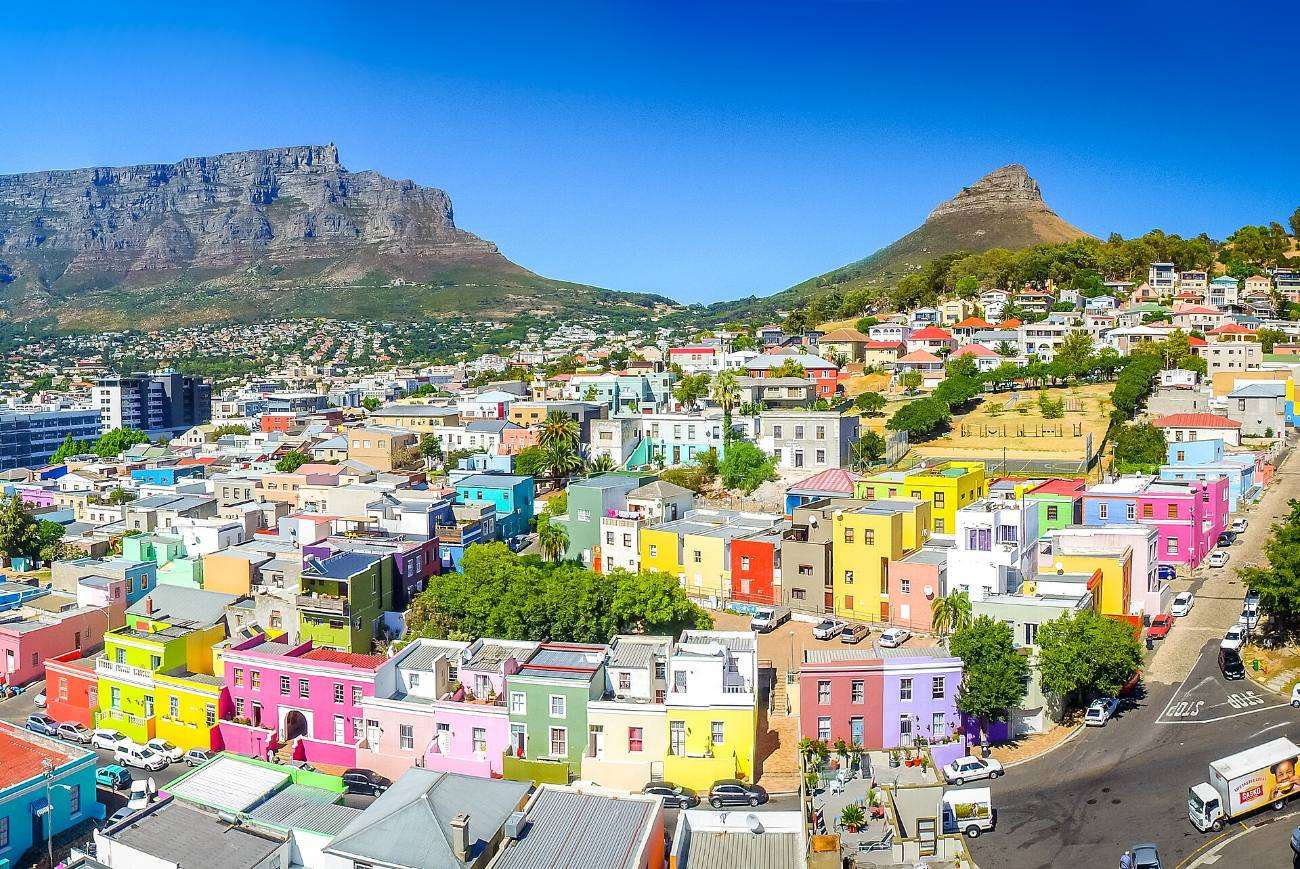
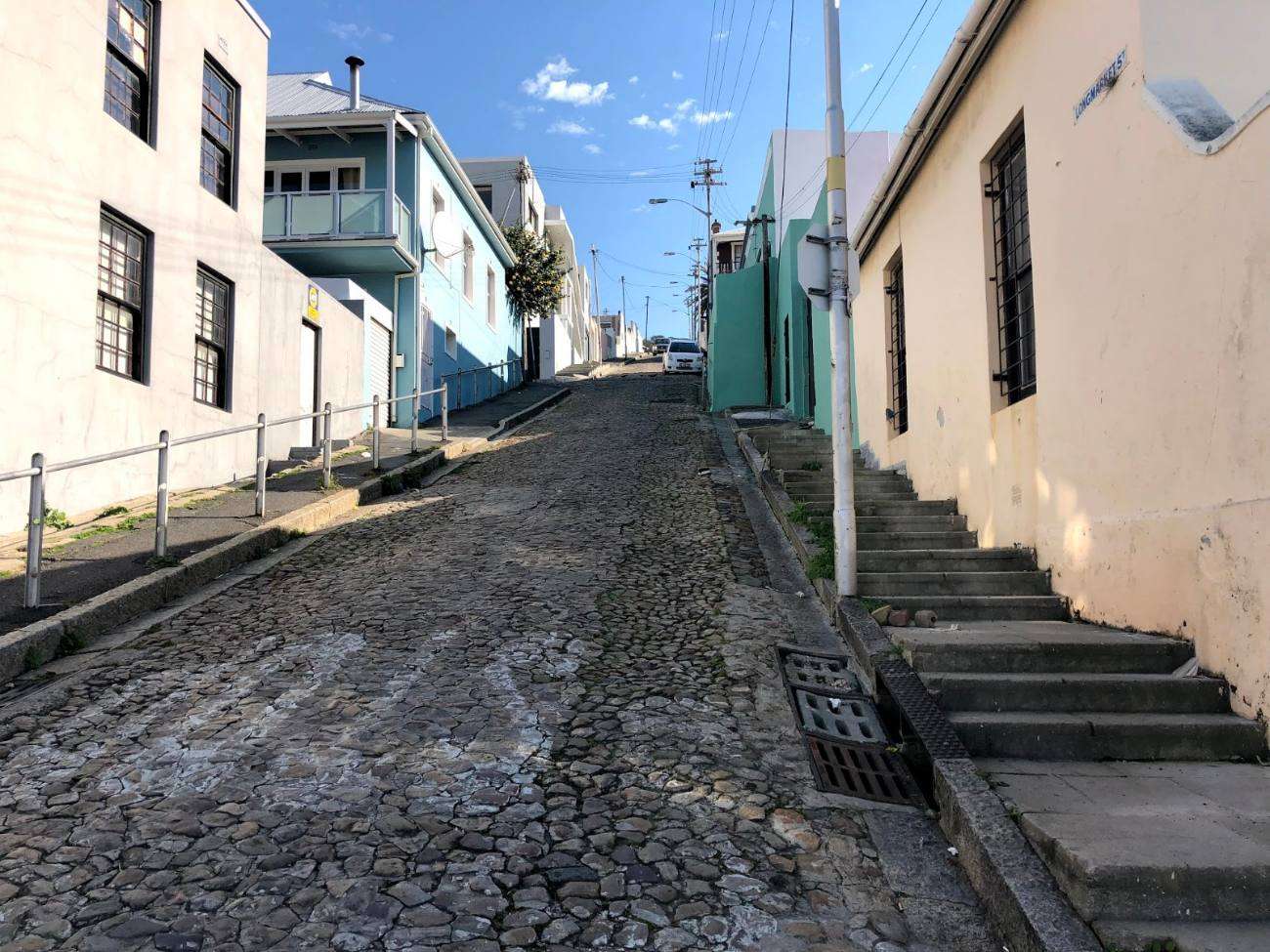
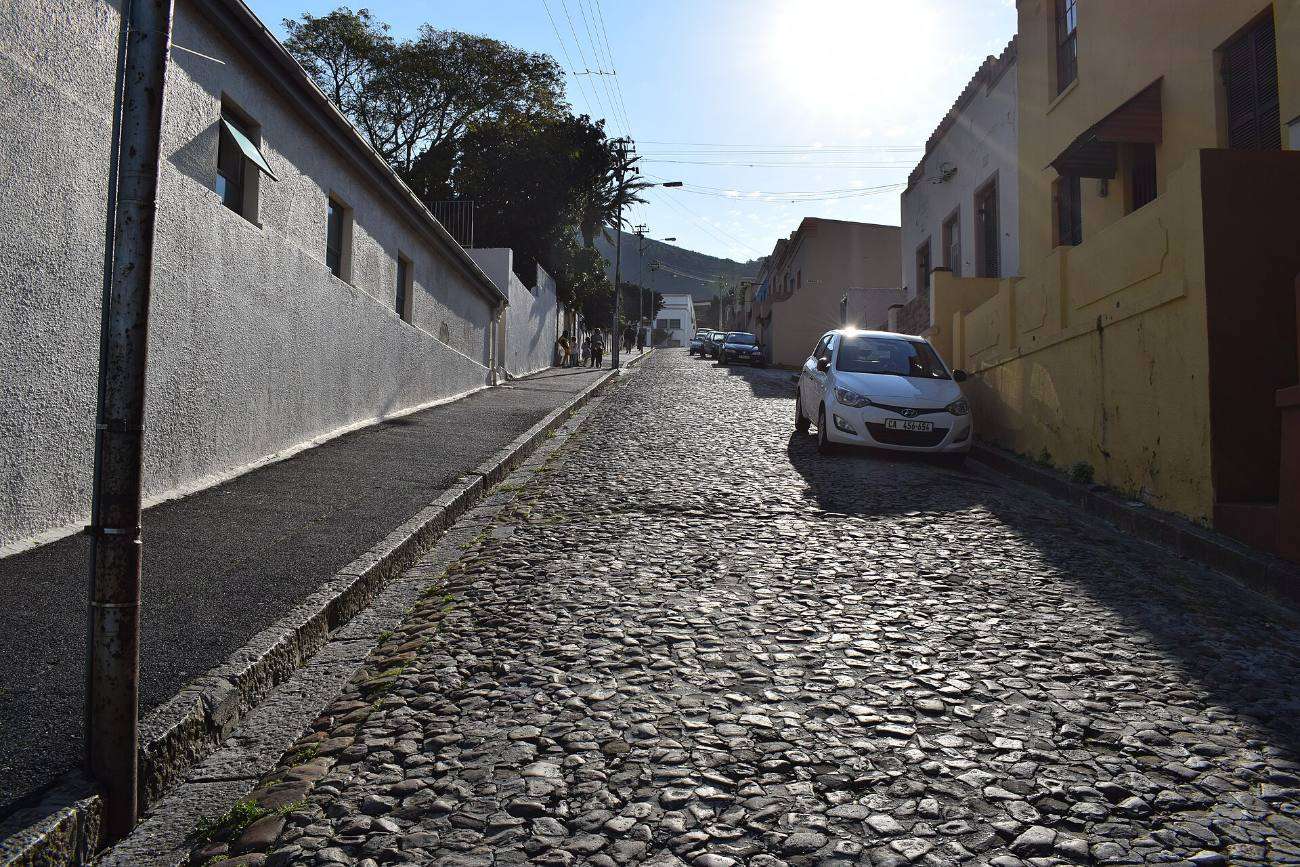
Walk up Wale Street from the city and within a few minutes the shops and office blocks give way to something else entirely: narrow cobbled lanes, the call to prayer, and rows of little houses painted every colour you can think of.
This is the Bo-Kaap. The name means "above the Cape", and it sits on the lower slope of Signal Hill, looking down over the city. For most of its life it was called the Malay Quarter, and it is still home to many of the families whose ancestors came to the Cape from the Indonesian islands, from India and from Africa, many of them as slaves. They brought their faith, their crafts and their cooking with them, and in these few streets that heritage has held on for more than two hundred years.
I love walking it slowly, with someone who lives here. It is a neighbourhood, not a museum, so you meet people on their stoeps, smell the spices from the kitchens and hear the stories behind the doors. Then we sit down to eat, because you cannot understand the Bo-Kaap without tasting it.
John Sparks
How the Bo-Kaap began
In 1760 a man named Jan de Waal bought land here at the foot of Signal Hill, between Dorp Street and Wale Street. From 1763 he built small houses on it, huurhuisjes, and rented them to his slaves. More houses followed in the Cape Dutch and Cape Georgian styles, and after slavery ended in 1834, long rows of narrow terraces were built for the families who stayed.
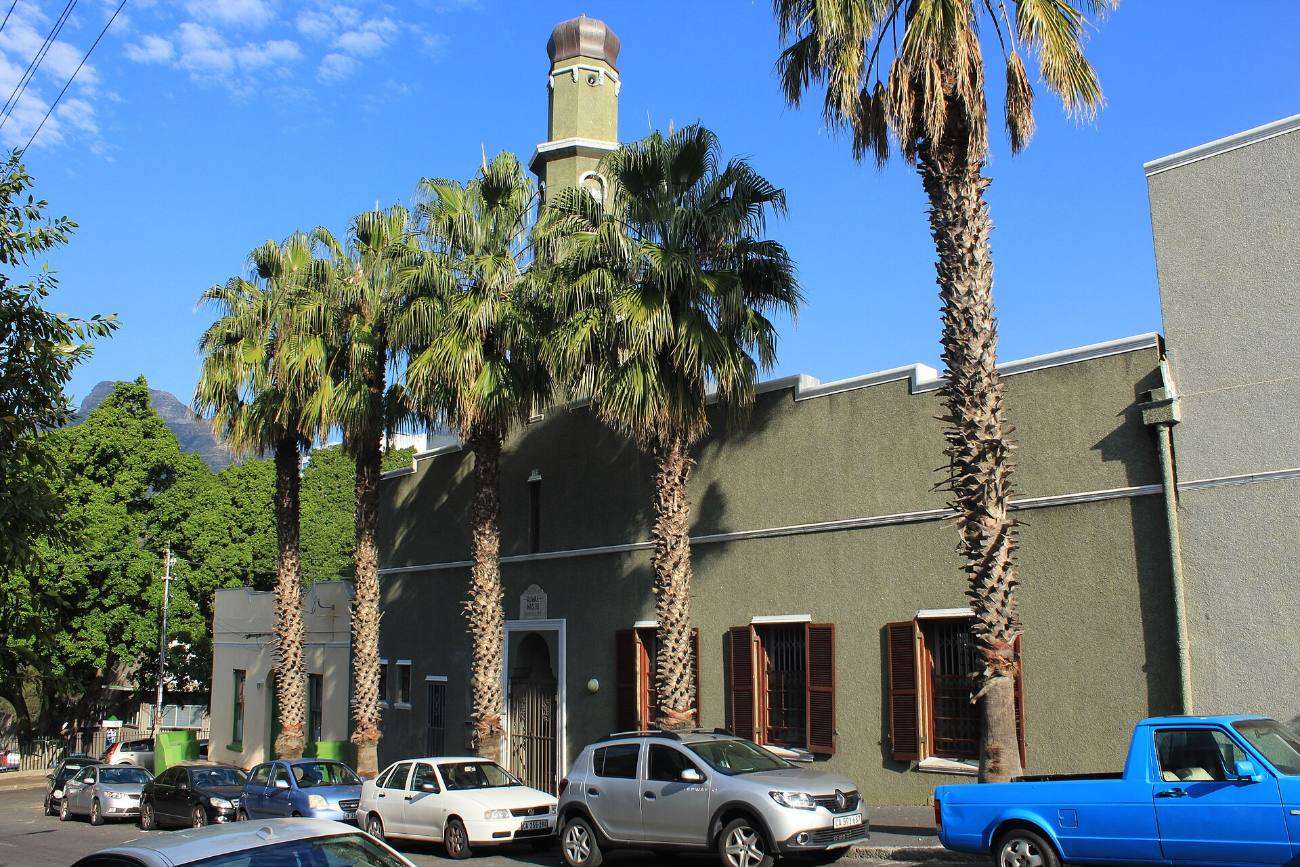
Many of the people who settled here were Muslim, and in 1794 the community opened the Auwal Mosque on Dorp Street. Its first imam was Tuan Guru, a prince and scholar from Tidore in the Indonesian islands who had been exiled to the Cape and held on Robben Island. While he was imprisoned he wrote out the whole Quran from memory, and that copy is still kept at the mosque. Today there are several mosques in these few streets, and you will hear the call to prayer drift over the rooftops through the day.
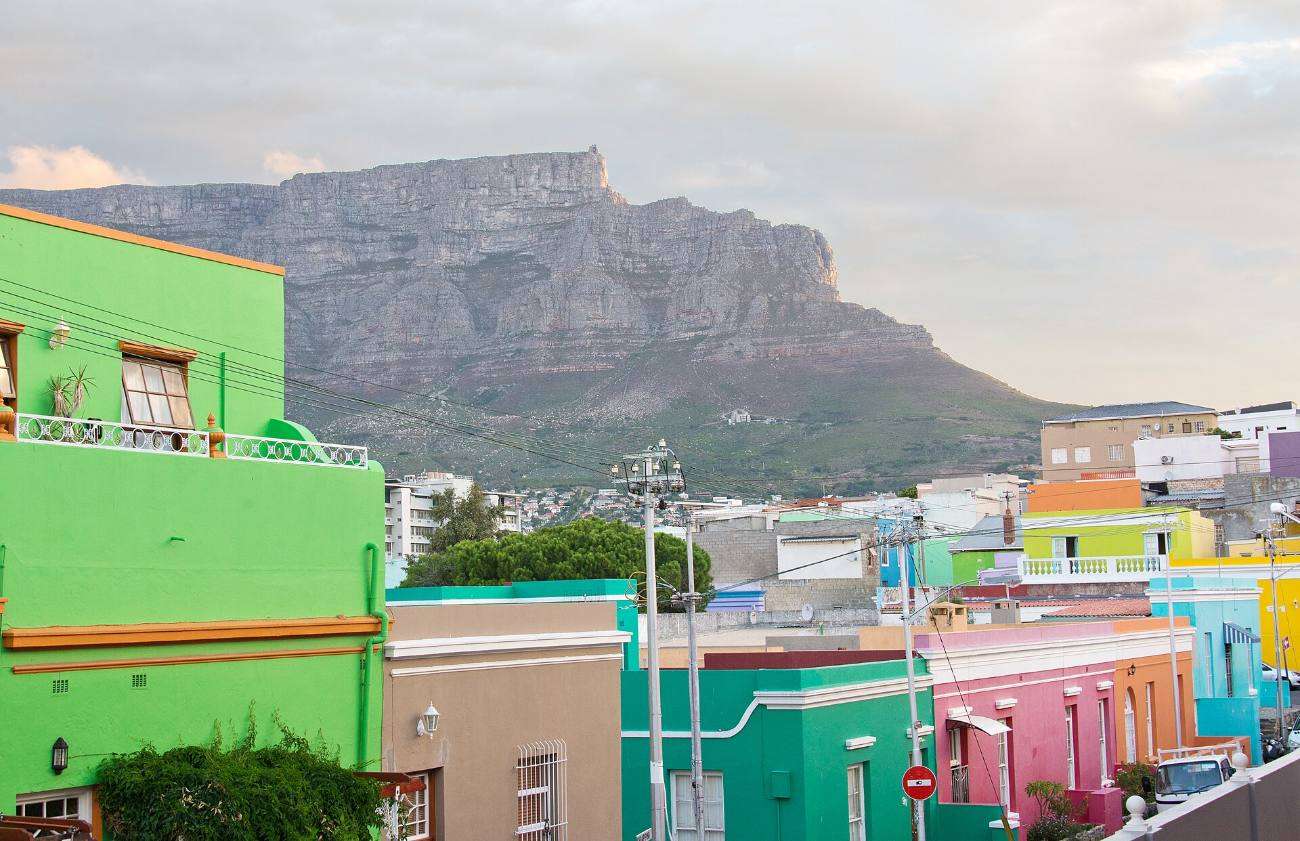
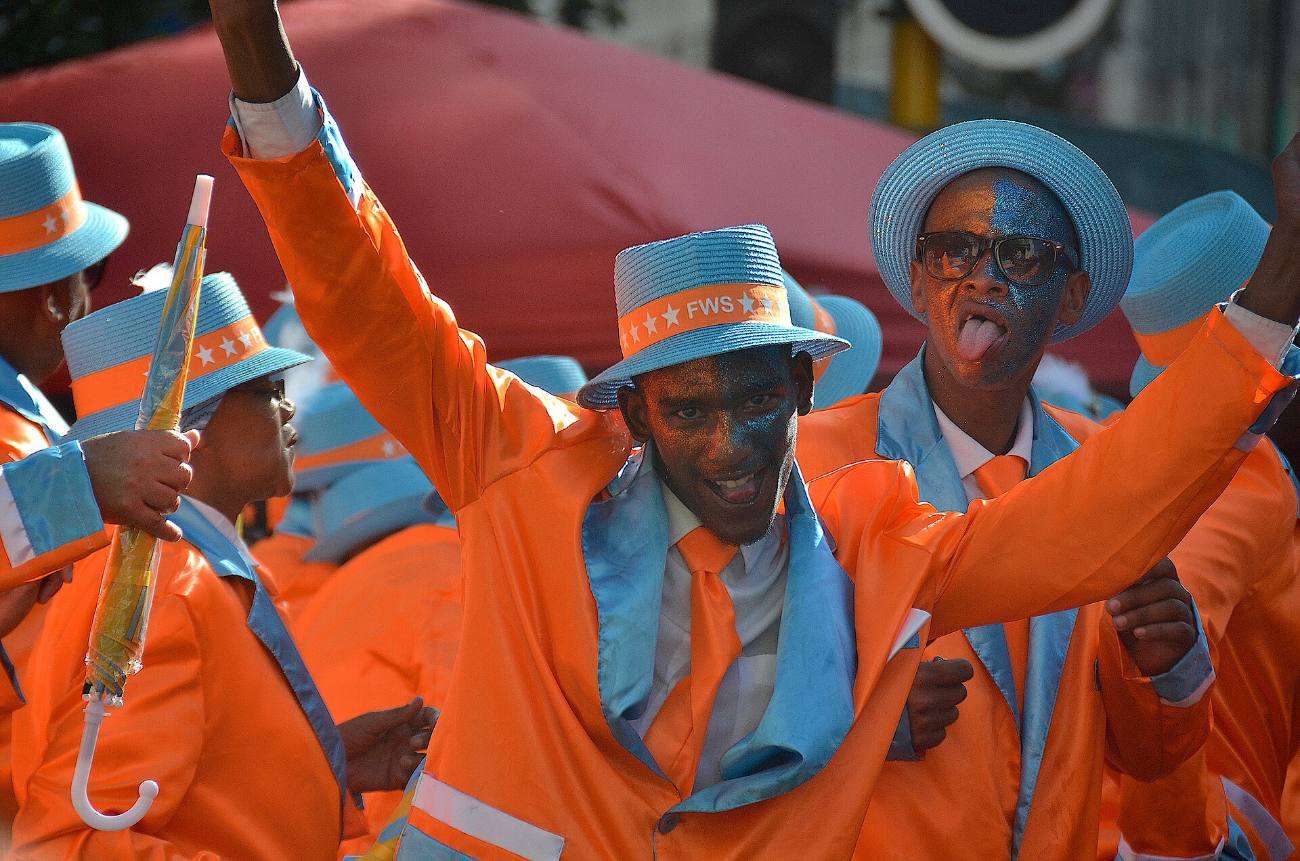
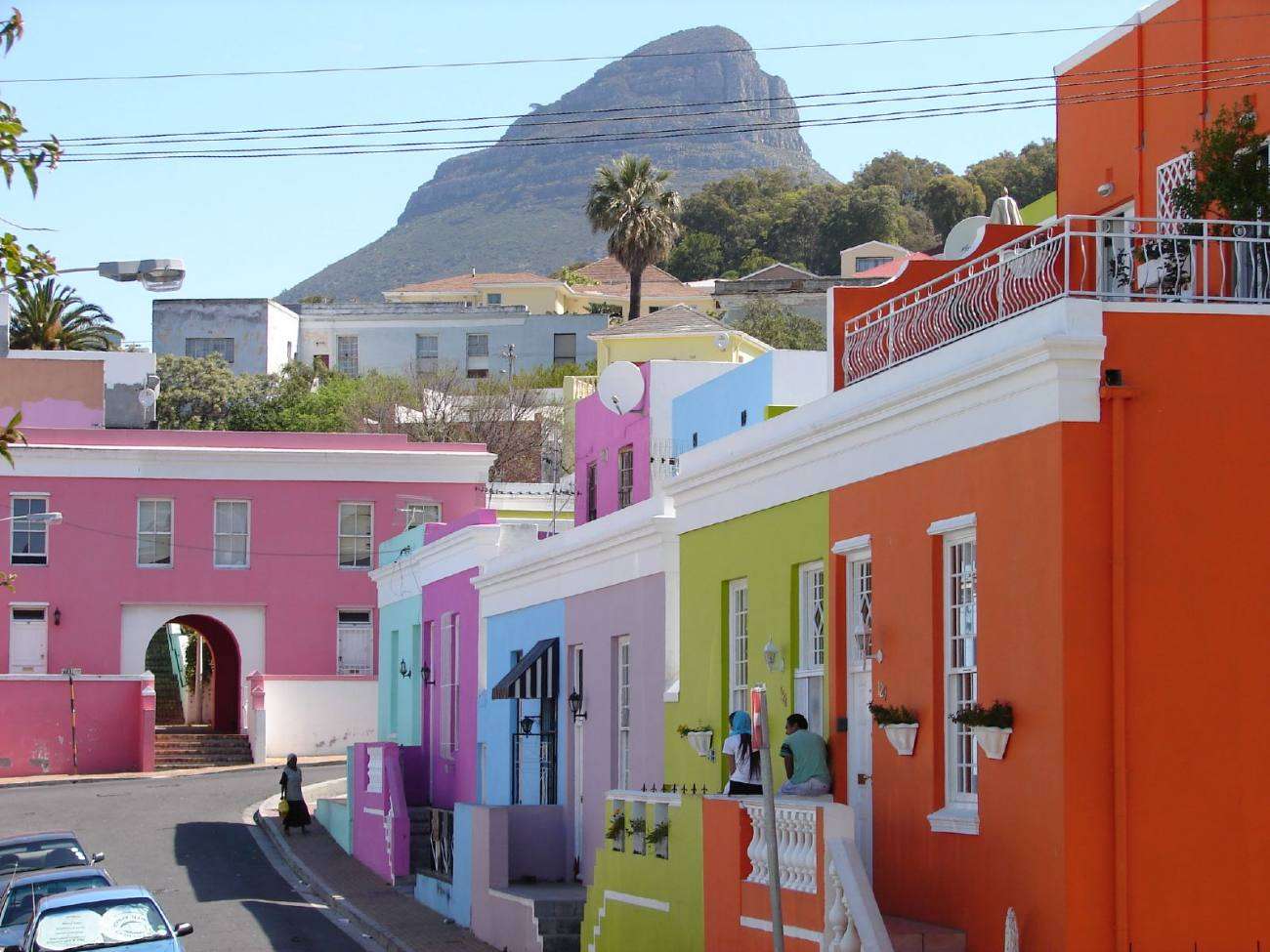
The houses were not always this bright. People often tell you they were painted white while they were rented and bursting with colour once families owned them, but the strong colours you see today mostly belong to the last few decades. Either way, the families here have made them a celebration of the place.
Under apartheid, people who were not classified as Malay were forced out, but unlike District Six on the other side of the city, the Bo-Kaap was never bulldozed. In 2019, after years of pressure from the community, around six hundred homes were protected as a heritage area, to keep the quarter for the people who live in it.
What to look for
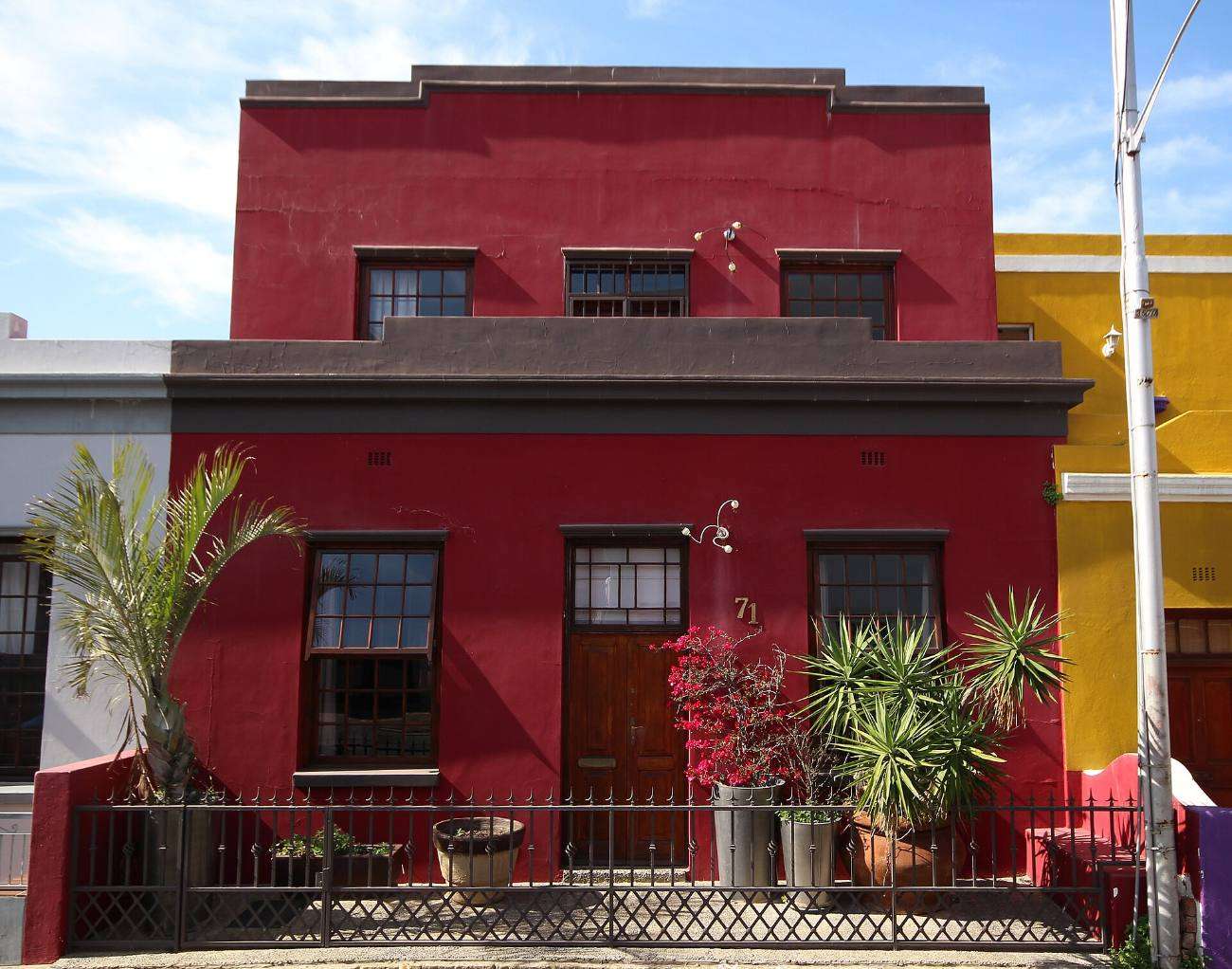
The Bo-Kaap Museum
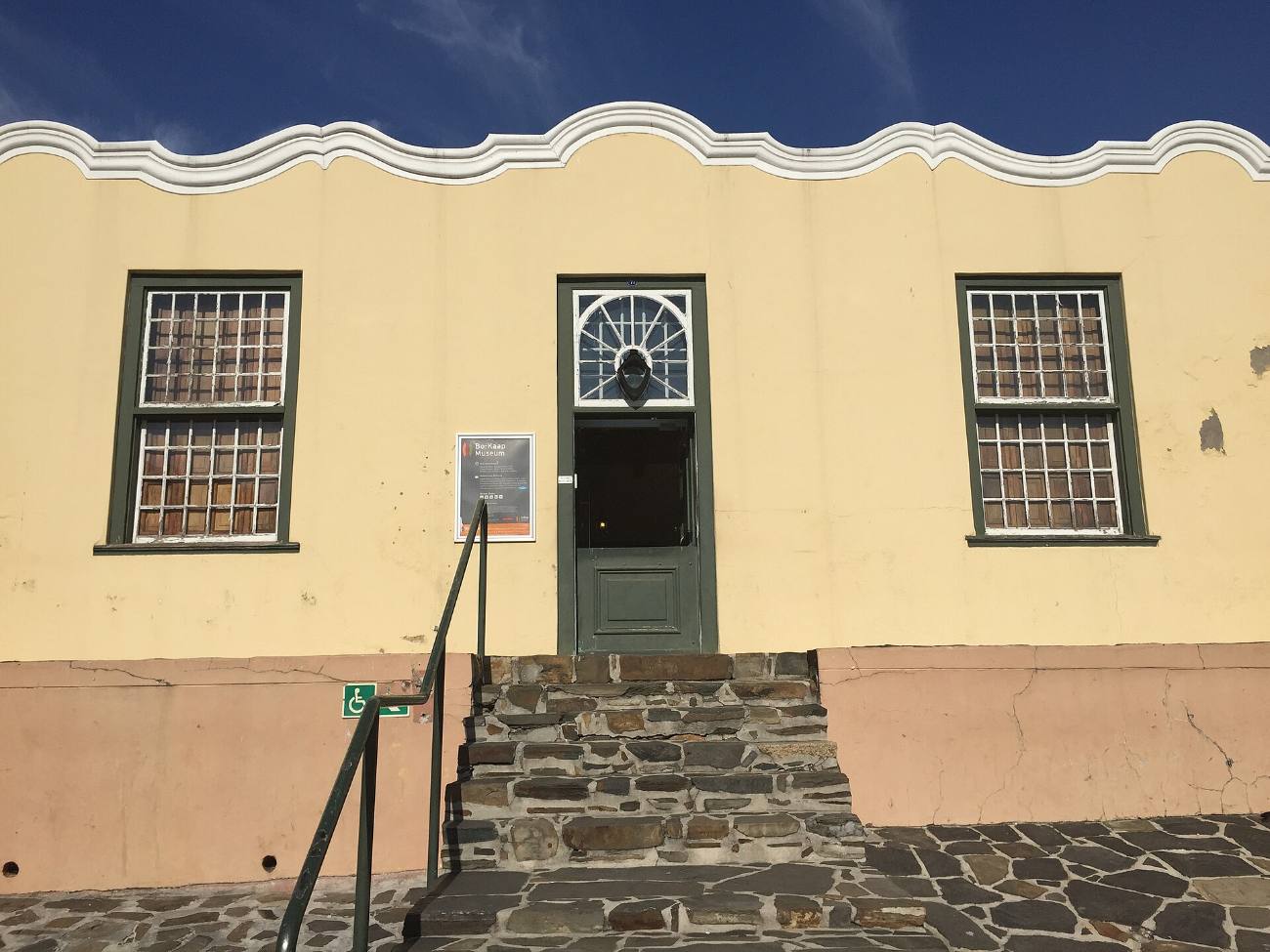
At 71 Wale Street, in a house from the 1760s, the oldest in the area still in its original form. Inside it is set out as the home of a well-to-do Cape Muslim family in the 1800s. Look out for the stoep at the front, with a bench at each end, where people sat in the evenings to talk to the street.
The Auwal Mosque
A plain building on Dorp Street that is easy to walk past, and one of the most important places in South Africa's story: the first mosque in the country, and the first where people could pray in public.
The streets
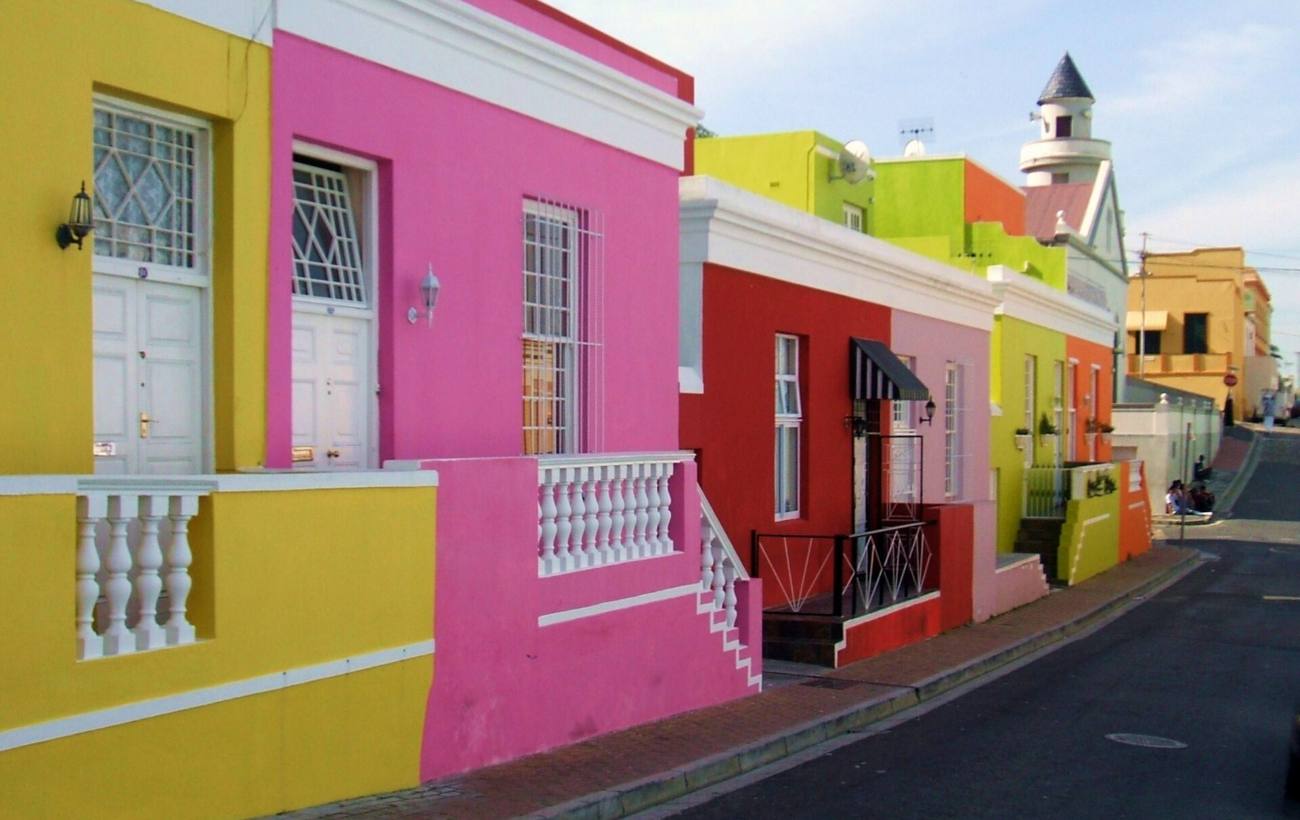
Wale Street is the main way up. Chiappini Street, Rose Street and Shortmarket Street have some of the brightest rows, and the cobbled lanes off them are the old Bo-Kaap.
Tana Baru
Higher up the hill is Tana Baru, a cemetery opened in 1804 for the Muslim families of the Cape. Tuan Guru is buried there, and it is still a place of pilgrimage.
The taste of the Bo-Kaap
Cape Malay cooking is one of the great kitchens of Africa. It is gentle rather than fiery, and warm with spice: cinnamon, cardamom, cloves, turmeric and chilli, with a little sweetness running through it. It is home cooking, made with love and handed down from mother to daughter.
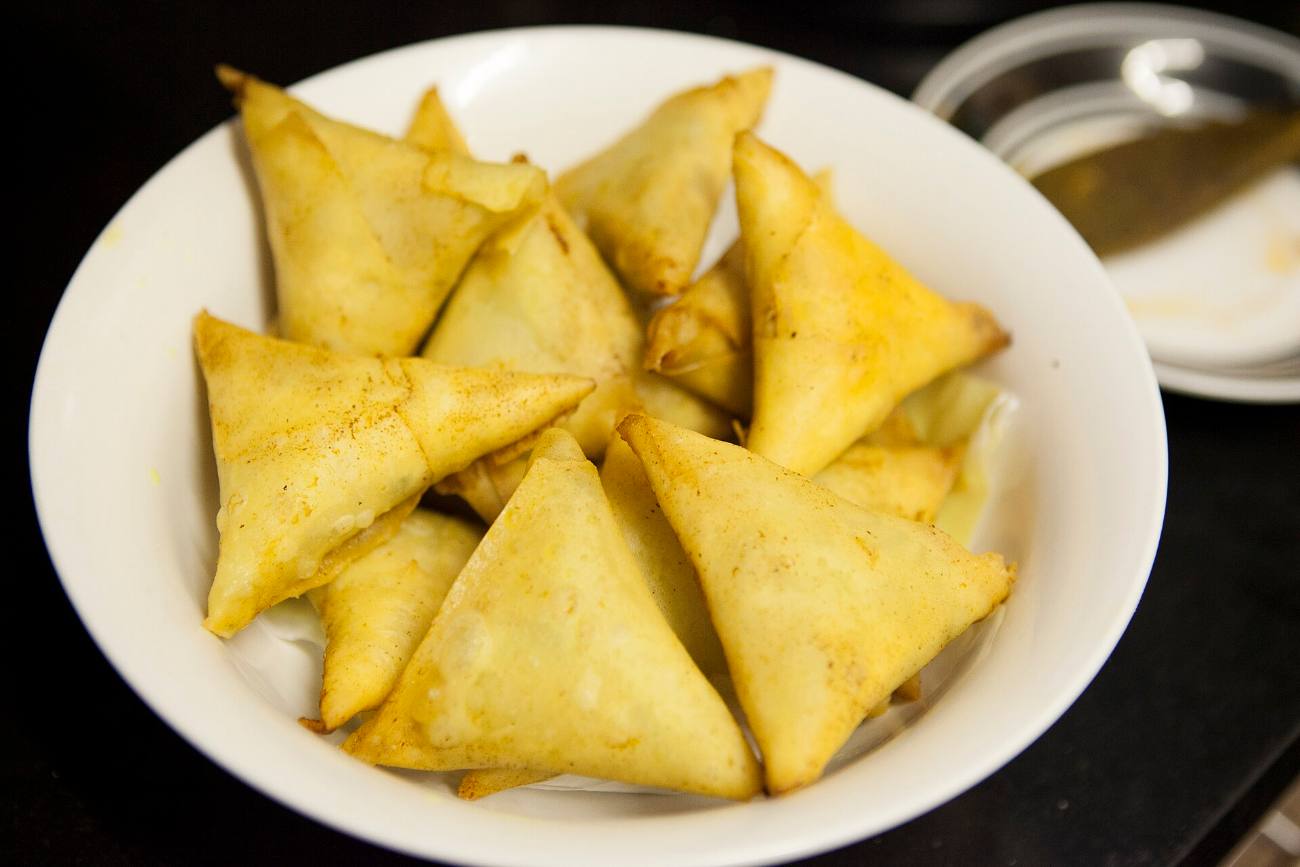
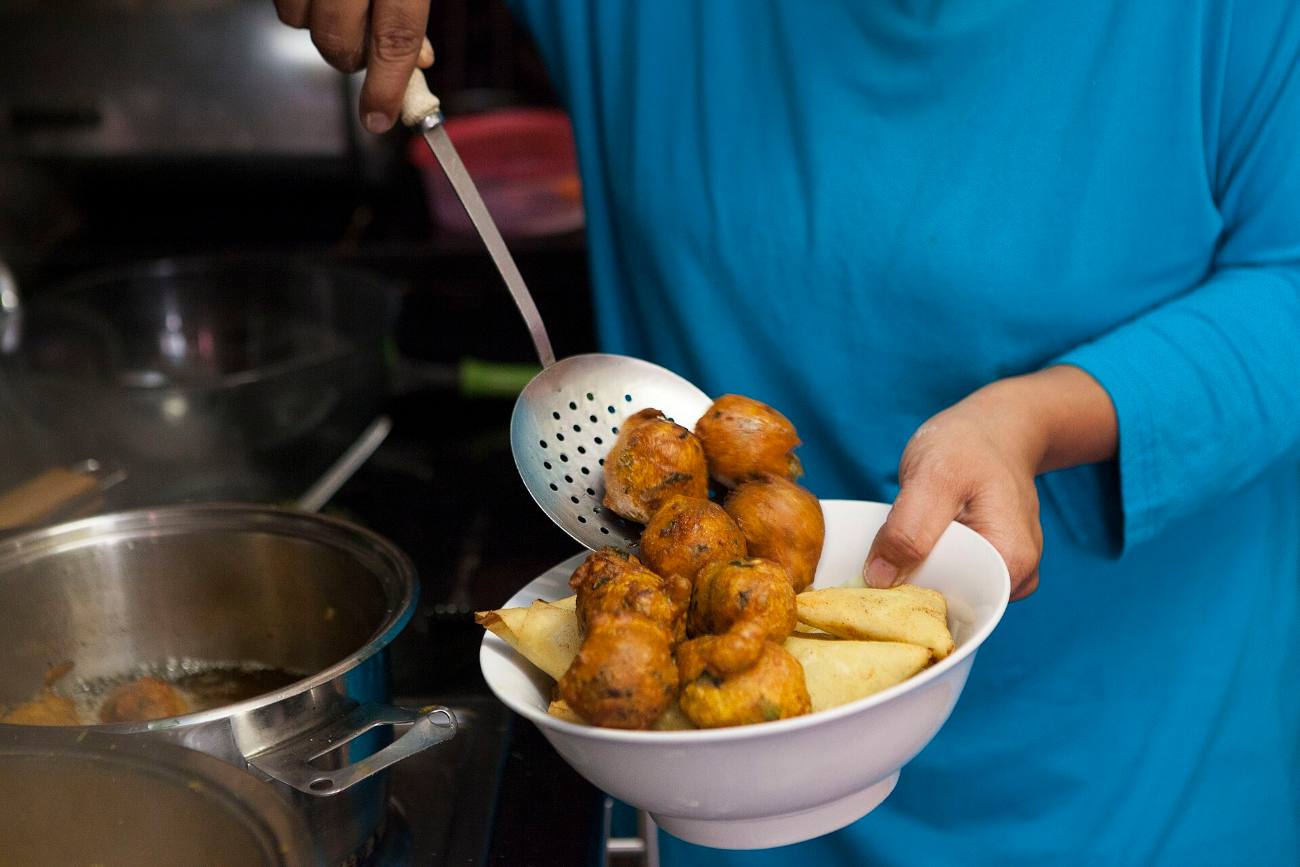
Look for bobotie, spiced mince baked under a golden egg custard; a slow tomato bredie; fragrant curries with roti; little samosas and chilli bites; and the Cape Malay koesister, a soft spiced doughnut rolled in coconut, which is not the same thing at all as the plaited Afrikaans koeksister. Ask about the difference and you will start a lively conversation.
The best way to know it is to cook it. We spend a morning in a Bo-Kaap home kitchen, learning to fold samosas and roll rotis with someone whose family has cooked here for generations, then sit down together to eat everything we have made.
The Bo-Kaap on film
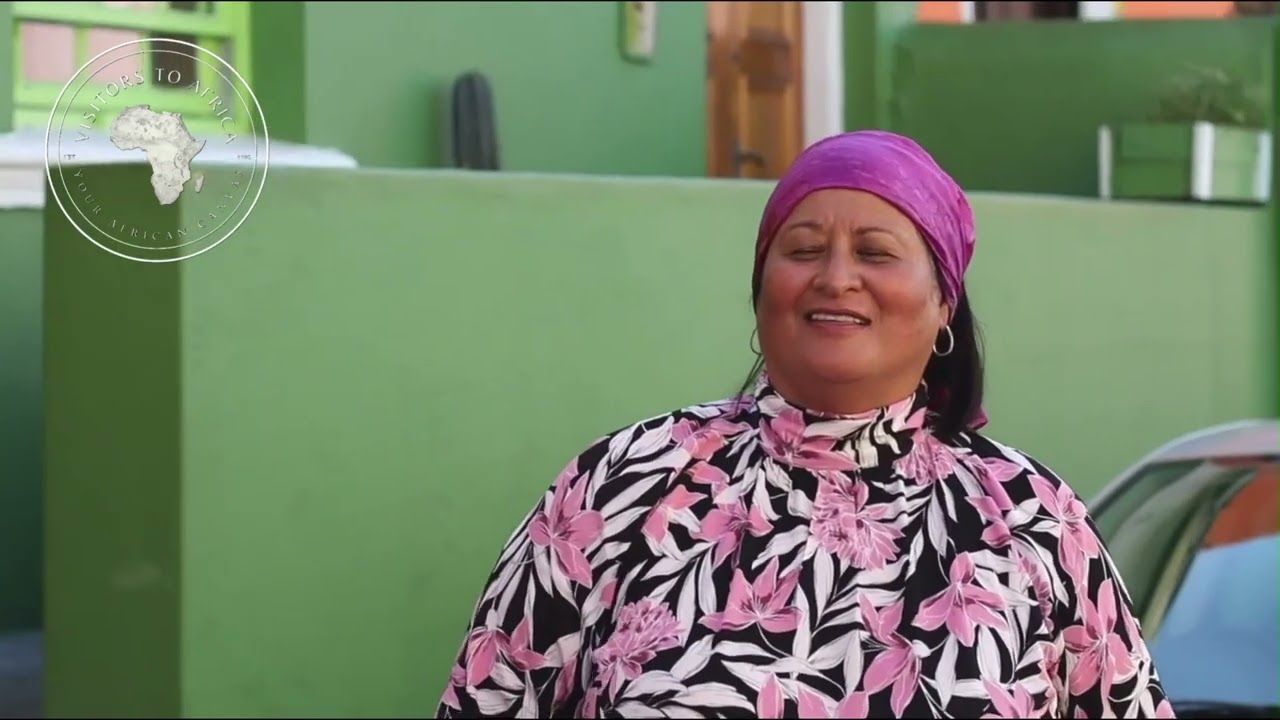
A morning in the Bo-Kaap, the way I like it
Walking up from the city
We start at the bottom of Wale Street and walk up into the quarter with a local guide who grew up here, slowly, stopping wherever something catches your eye.
The museum and the mosque
A short visit to the Bo-Kaap Museum, and a stop outside the Auwal Mosque to hear its story.
The colours
Time to wander the brightest streets and take your photographs, with a guide who knows which corners catch the best light, and when.
Into the kitchen
Then into a family kitchen to cook and eat together. For many of our guests, it ends up being the part of Cape Town they talk about most.
Spices to take home
On the way out we stop at one of the old spice shops, so that you can take the smell of the Bo-Kaap home with you.
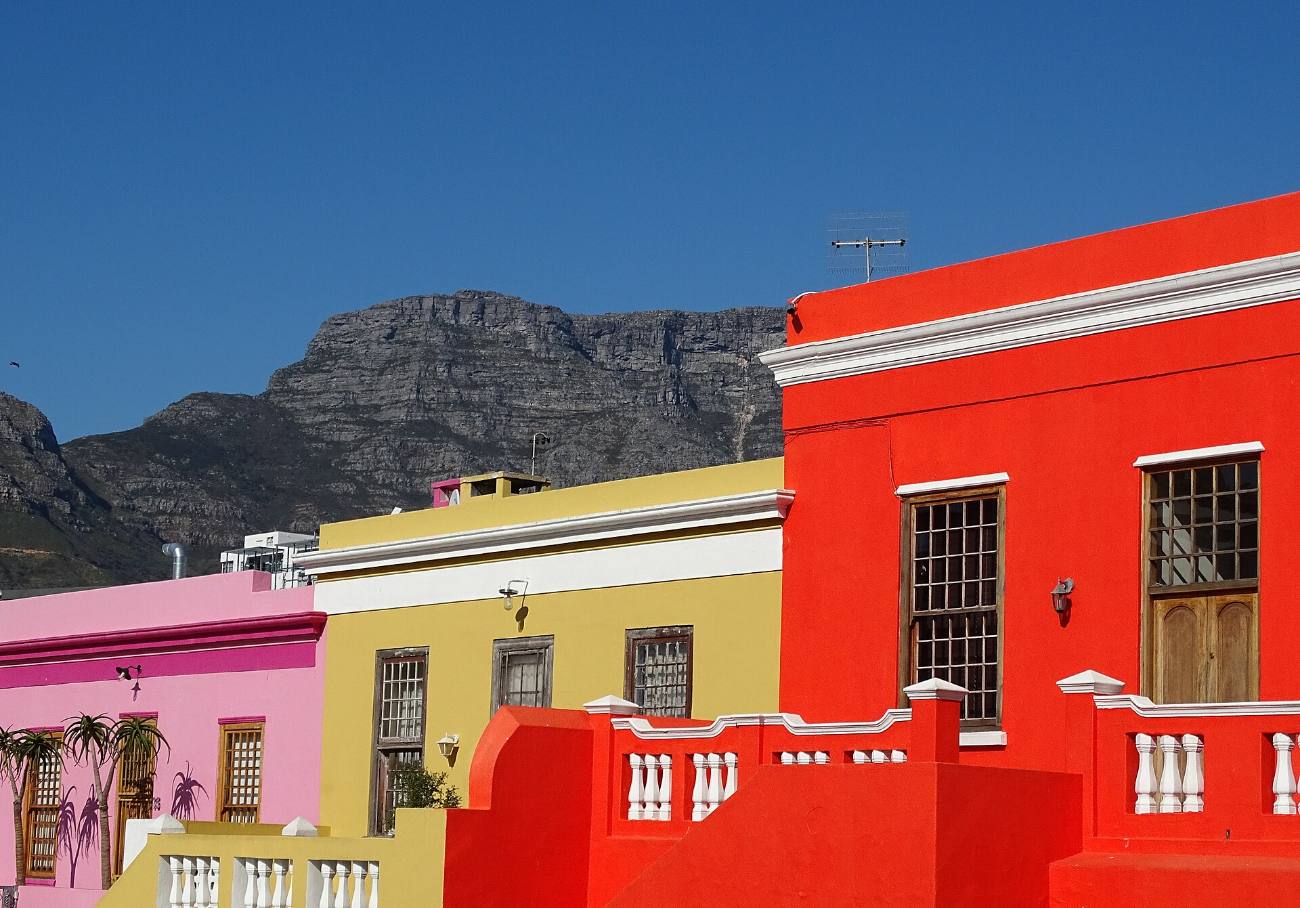
The Kaapse Klopse
If you are in Cape Town at New Year, look out for the Kaapse Klopse. On the second of January, Tweede Nuwejaar, troupes of minstrels in bright satin suits, painted faces and straw boaters dance through the streets of the city with banjos, drums and brass bands. The tradition has deep roots in the Bo-Kaap and the old neighbourhoods of the city, and it is one of the happiest, noisiest days of the Cape year.
Photographs and videos to keep
Thirty-two photographs of the Bo-Kaap, the houses, streets, museum, mosque and food, to look at large and download, and our film from Chef's Malay Kitchen.
Open the gallery ↗Every door has a family behind it, and every family has a story.
Before you go
Where
On the slope of Signal Hill, directly above the city centre. It is a five-minute walk up Wale Street from Greenmarket Square.
When
Mornings are best: cooler for walking, softer light for photographs, and the streets are quieter. The museum is closed on some days, so we plan around it.
Respect
People live in every one of these houses. Please don't sit on the stoeps or photograph people without asking, and dress modestly near the mosques, especially at prayer times and on Fridays.
Bring
Comfortable shoes for steep cobbles, a hat and an appetite. The cooking ends with a proper meal.
Pairs well with
Sundowners on Signal Hill just above, a morning on Table Mountain, dinner at Mama Africa, and a night at Radisson RED at the Waterfront.