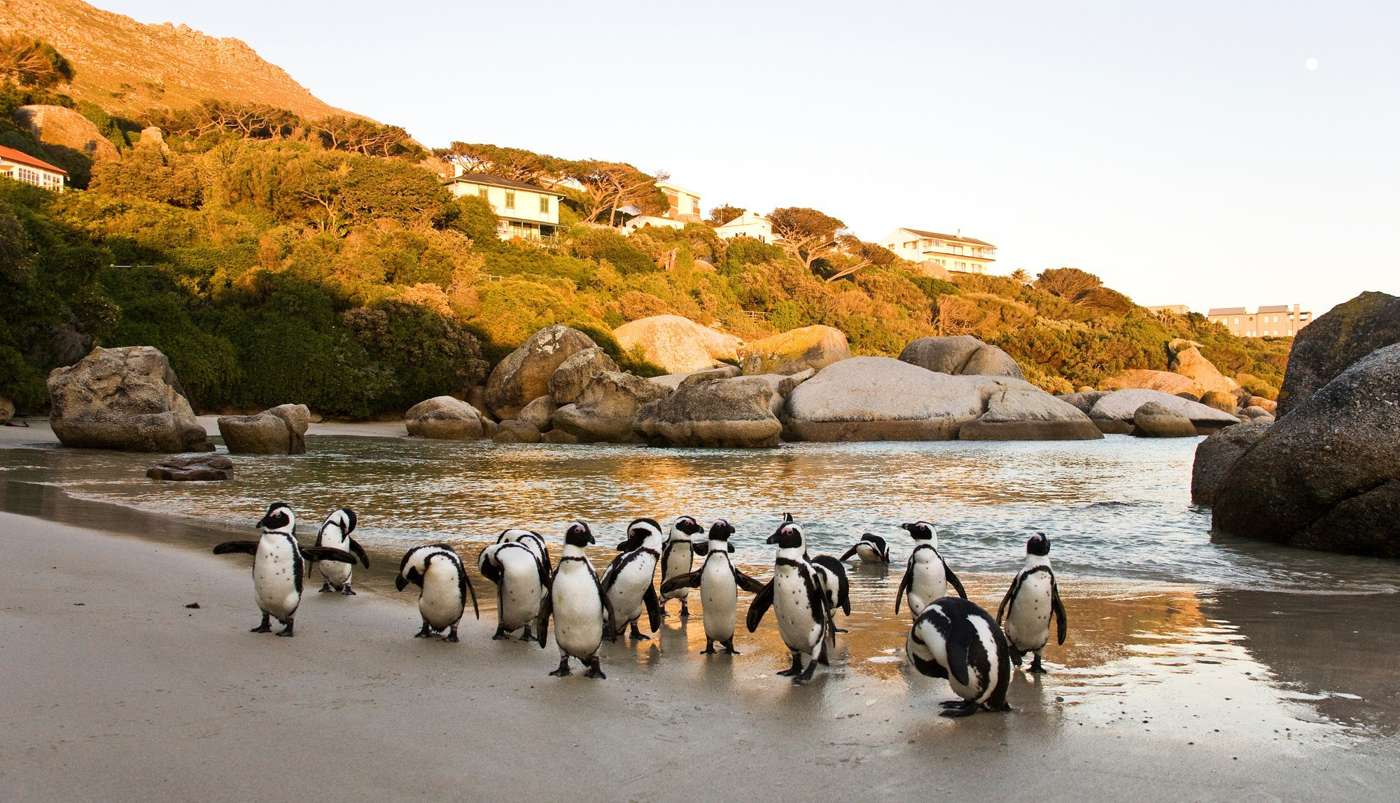
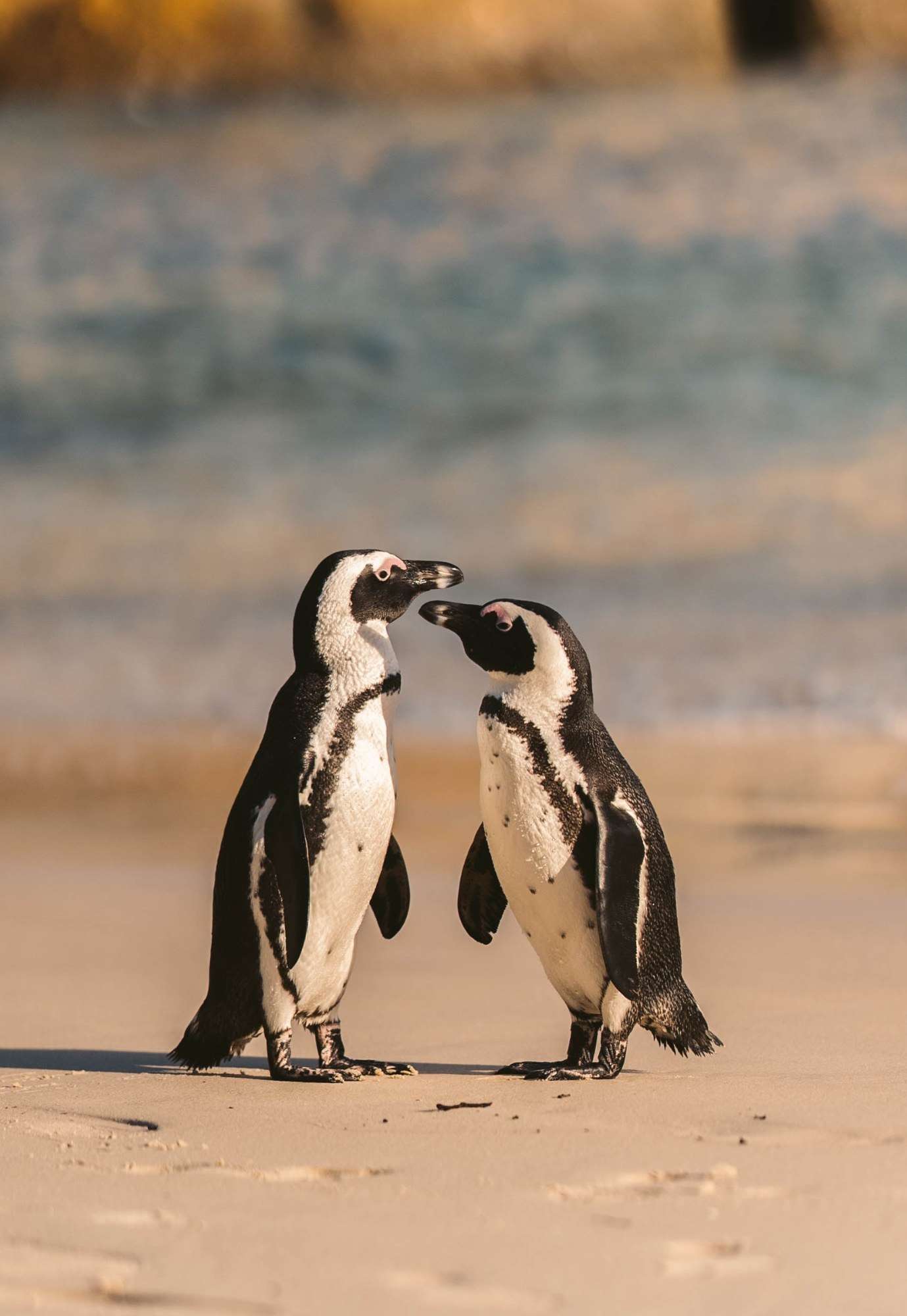
There are not many places in the world where you can sit on a beach and have a wild penguin walk past your feet. This is one of them.
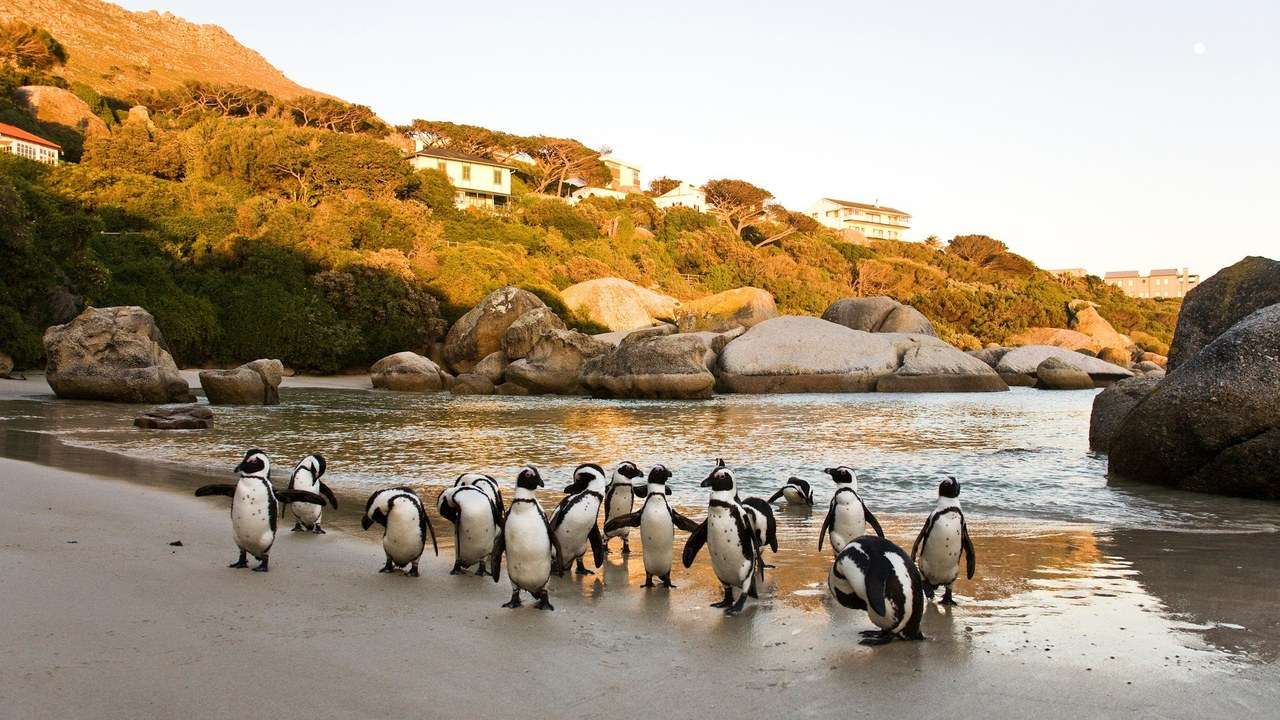
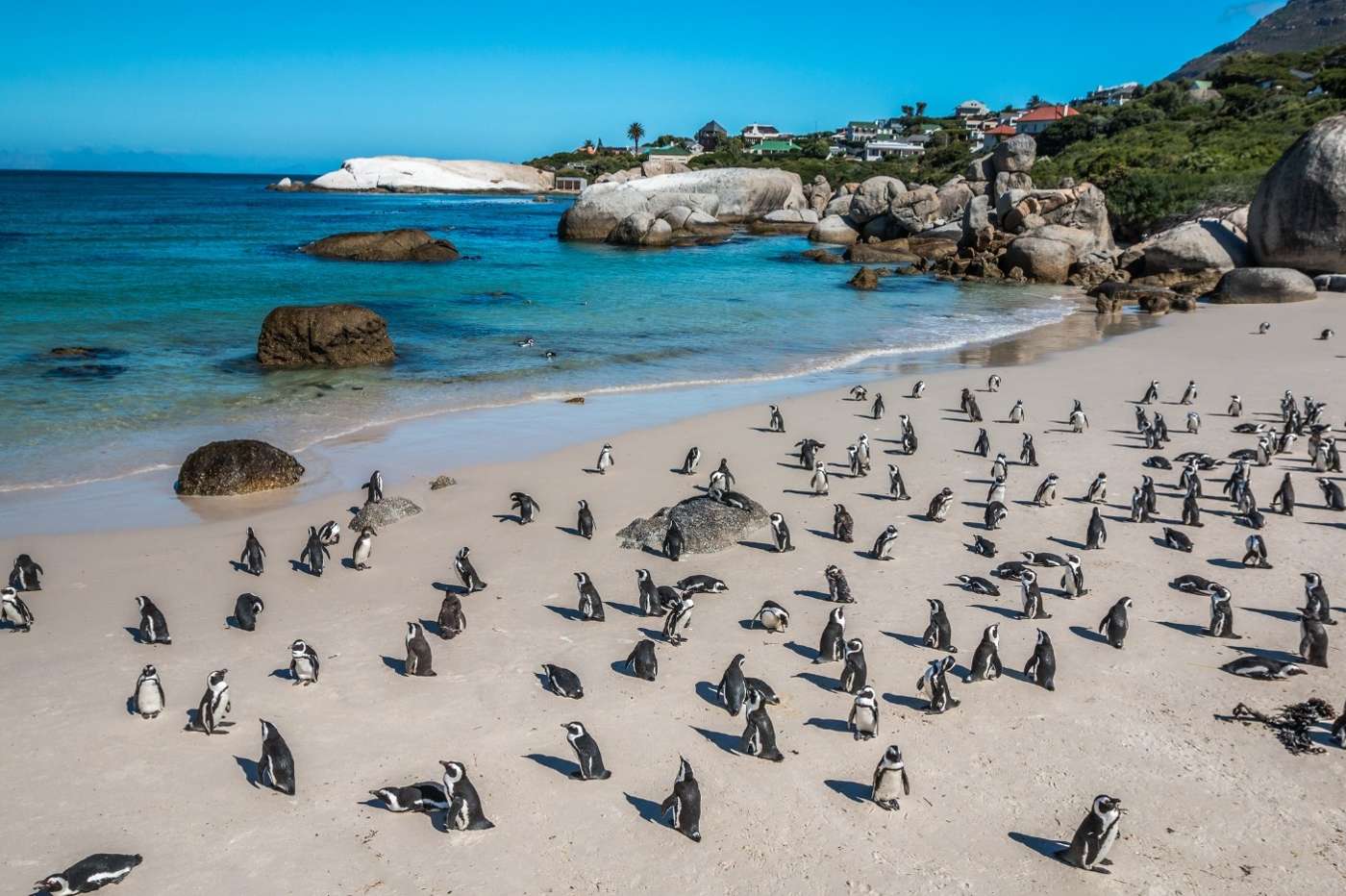
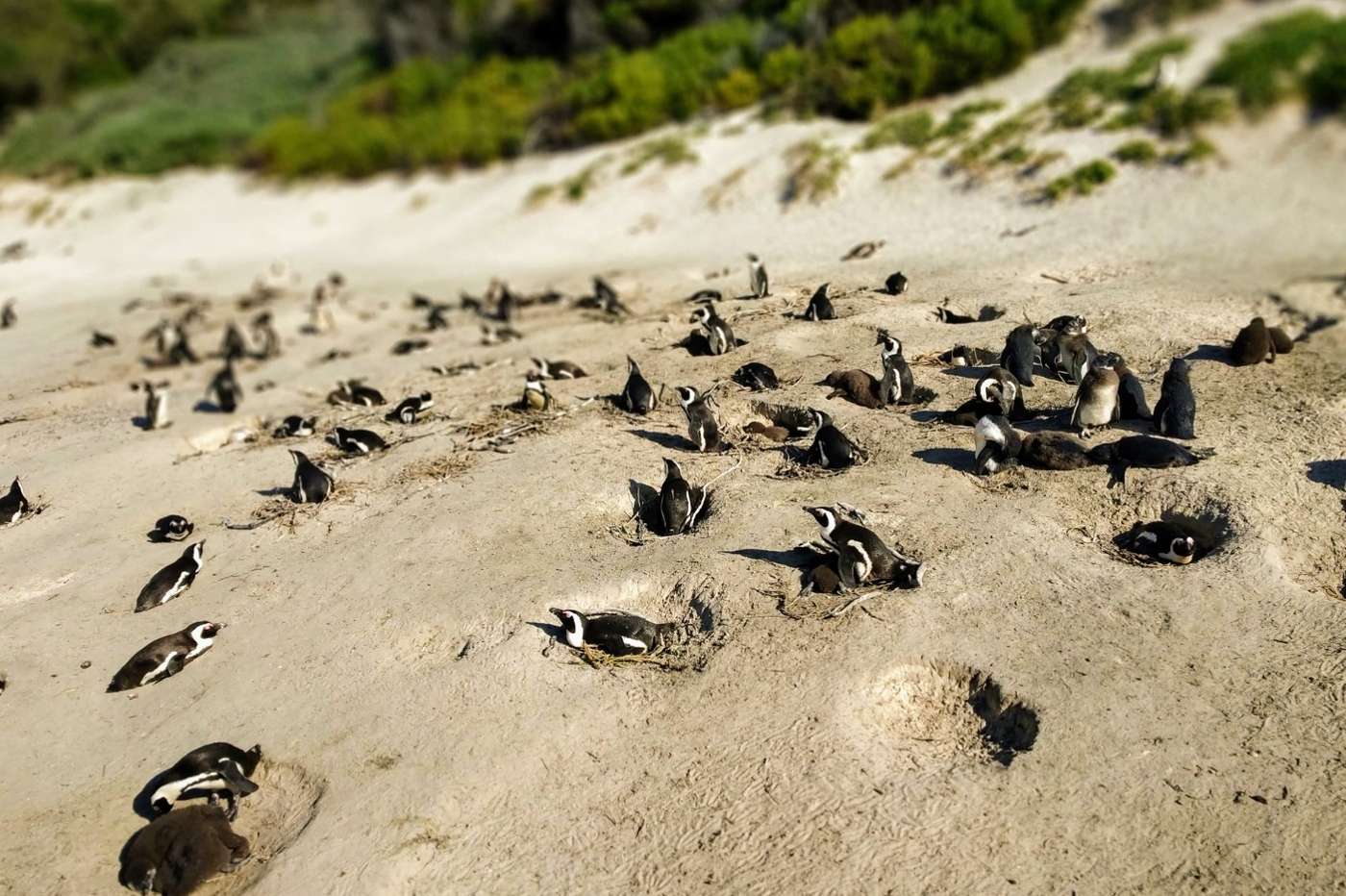
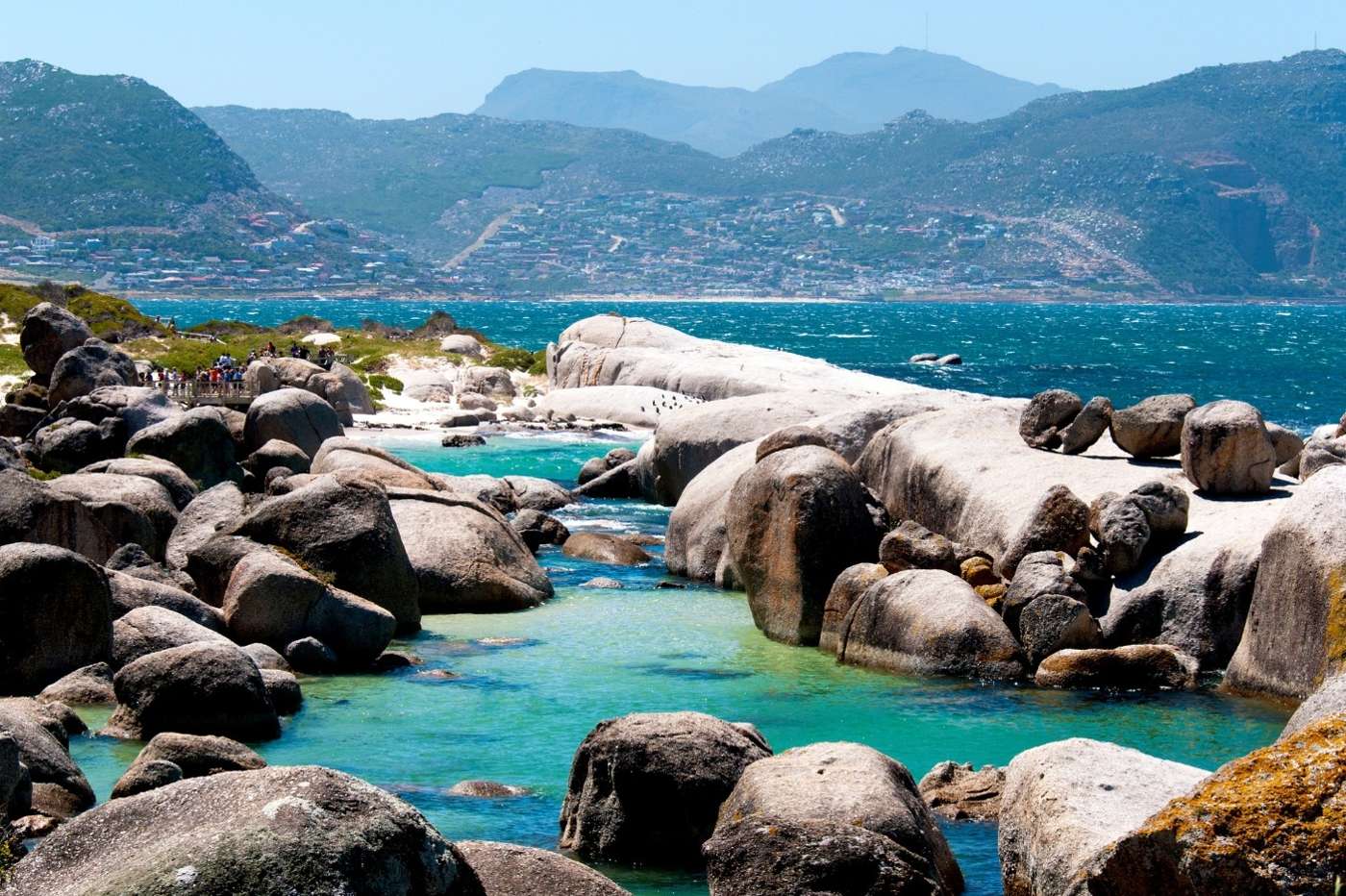
Boulders Beach lies just beyond Simon's Town, on the warm side of the Cape Peninsula. Great rounded boulders of granite break the shore into small coves of white sand and clear, shallow water, and in among them live the African penguins: about two thousand of them, nesting under the bushes, standing on the rocks to dry in the sun, and porpoising out through the coves to fish.
I never tire of it. Guests arrive expecting to see penguins in the distance, and find one looking up at them from the boardwalk. We come in the late afternoon, when the birds are coming ashore, and stay as long as the light allows.
John Sparks
The penguins, in a minute and a quarter
Penguins swimming through the coves, coming ashore, on the boulders, at the nest and walking the sand between the rocks. Plays on YouTube, sound on.
A colony that chose its beach
Two pairs, in 1982
The colony began when two breeding pairs came ashore here in 1982. Left undisturbed among the boulders, they stayed, and the birds that came after them made this one of the few places on the mainland where African penguins breed.
Found only here
African penguins live only on the coasts of South Africa and Namibia. Nowhere else on earth will you see them in the wild.
The jackass penguin
Their call is a loud, braying honk, which is why they were long known as jackass penguins. You will hear the colony before you see it.
Built for the cold sea
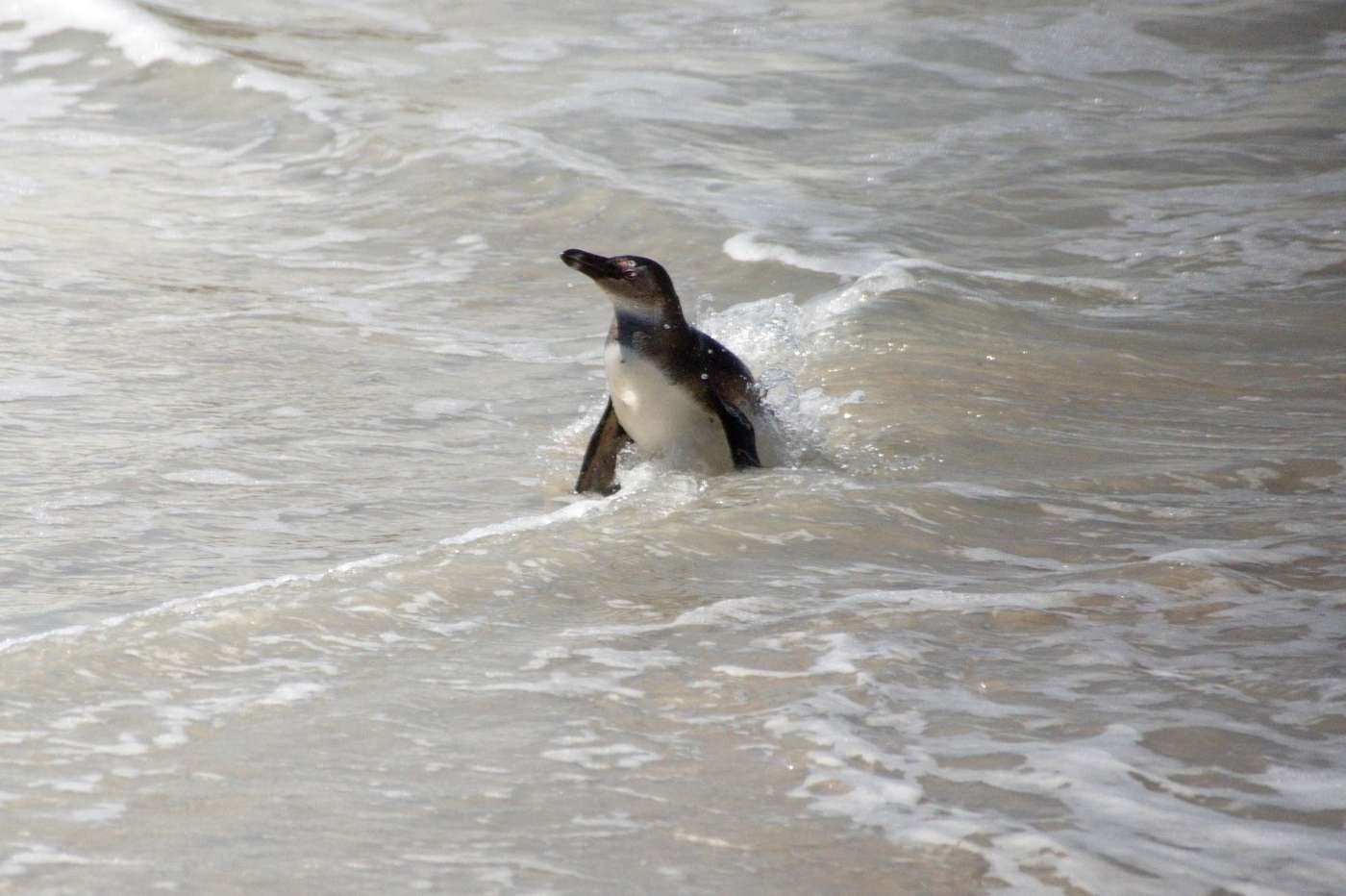
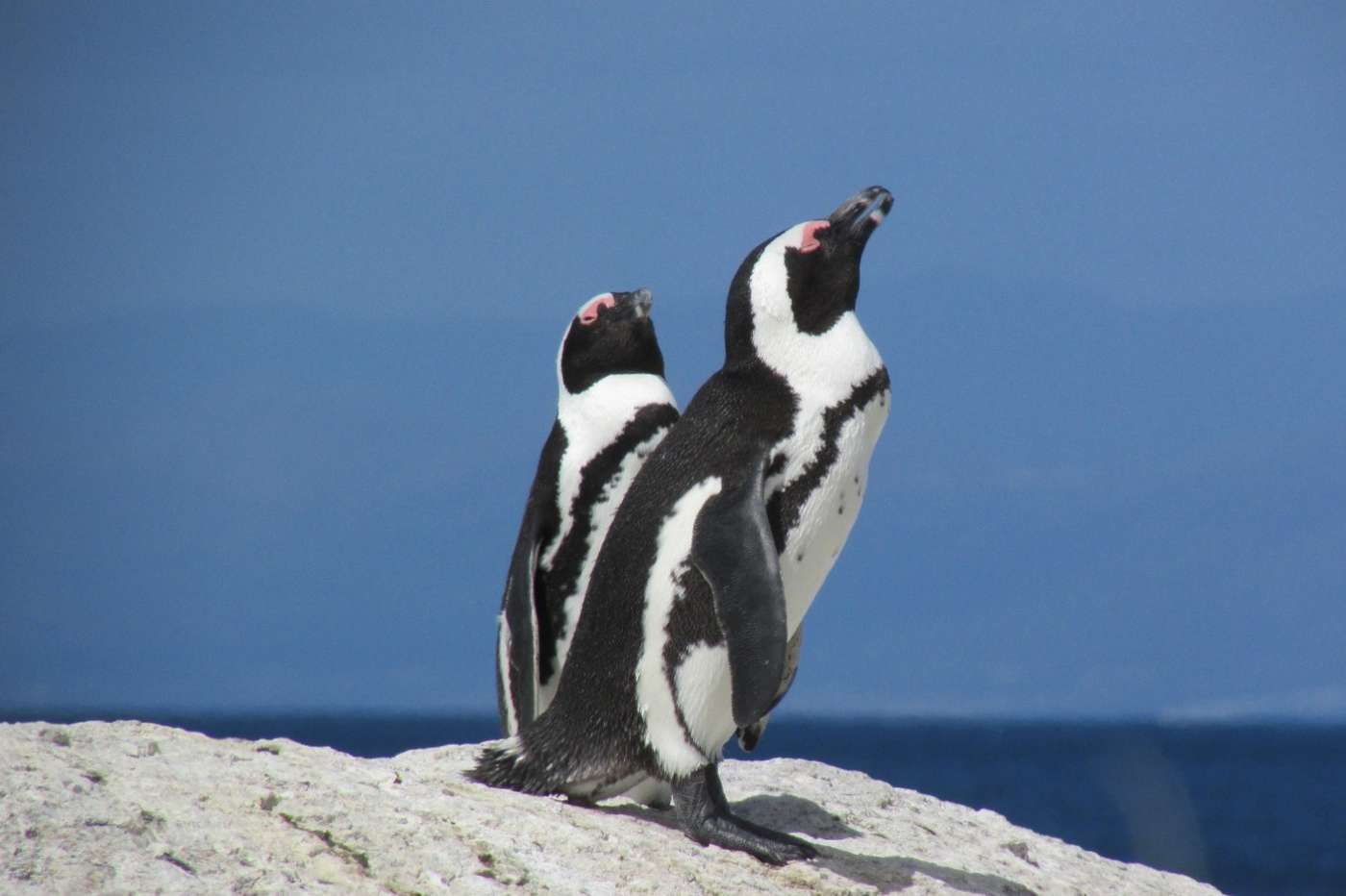
On land they waddle; in the water they fly, at up to twenty kilometres an hour. The pink patches above their eyes are bare skin that helps them shed heat in the sun.
Faithful to the nest
Pairs tend to stay together and return to the same nesting site, dug into the sand under the bushes or tucked between the boulders.
Critically endangered
In 2024 the African penguin was listed as critically endangered. Boulders is part of Table Mountain National Park, and the colony is protected; we keep to the boardwalks and give the birds their space.
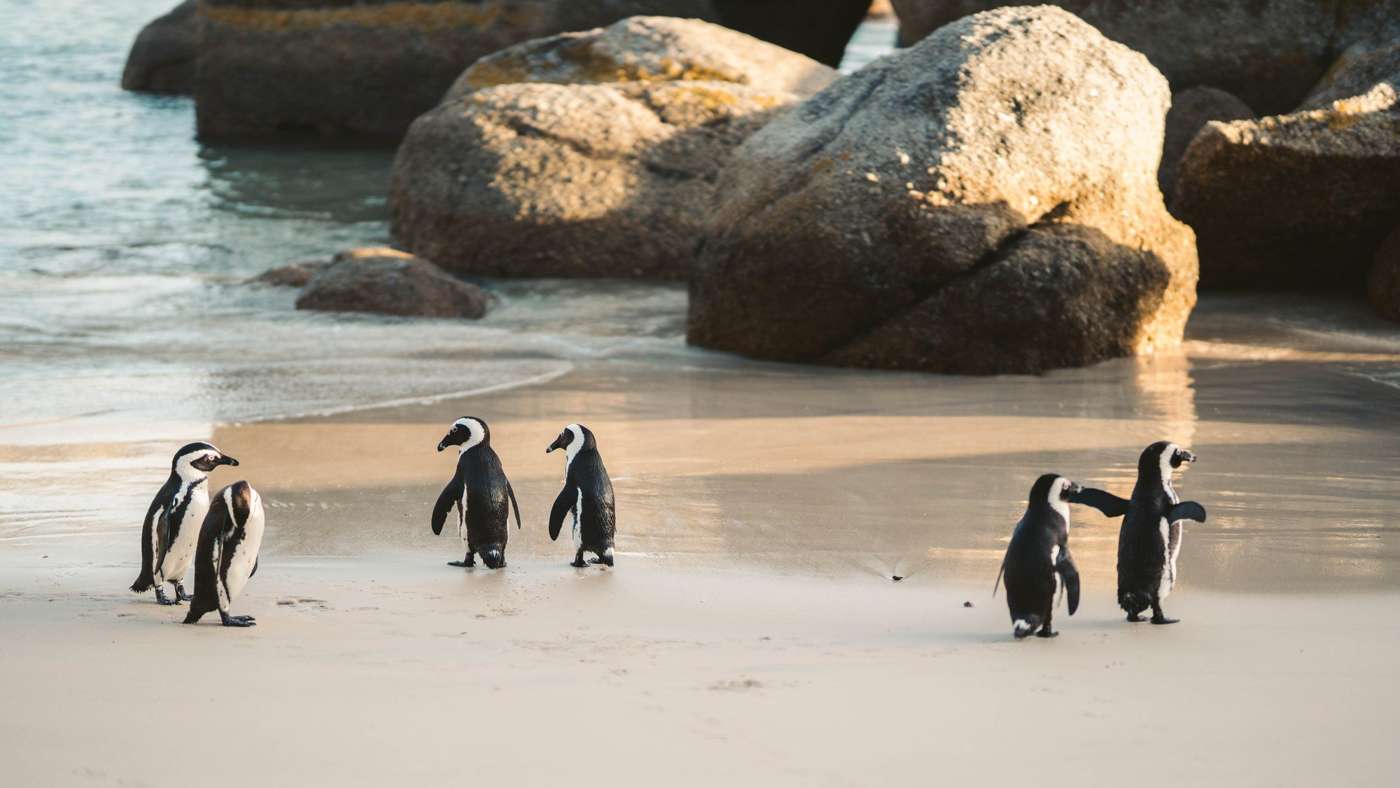
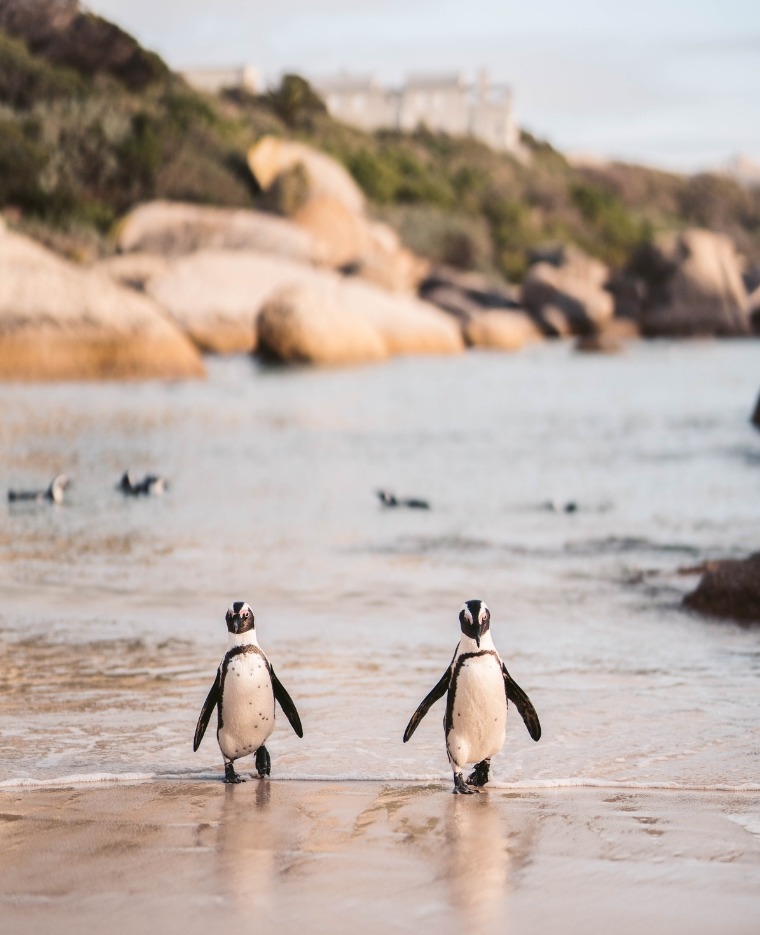
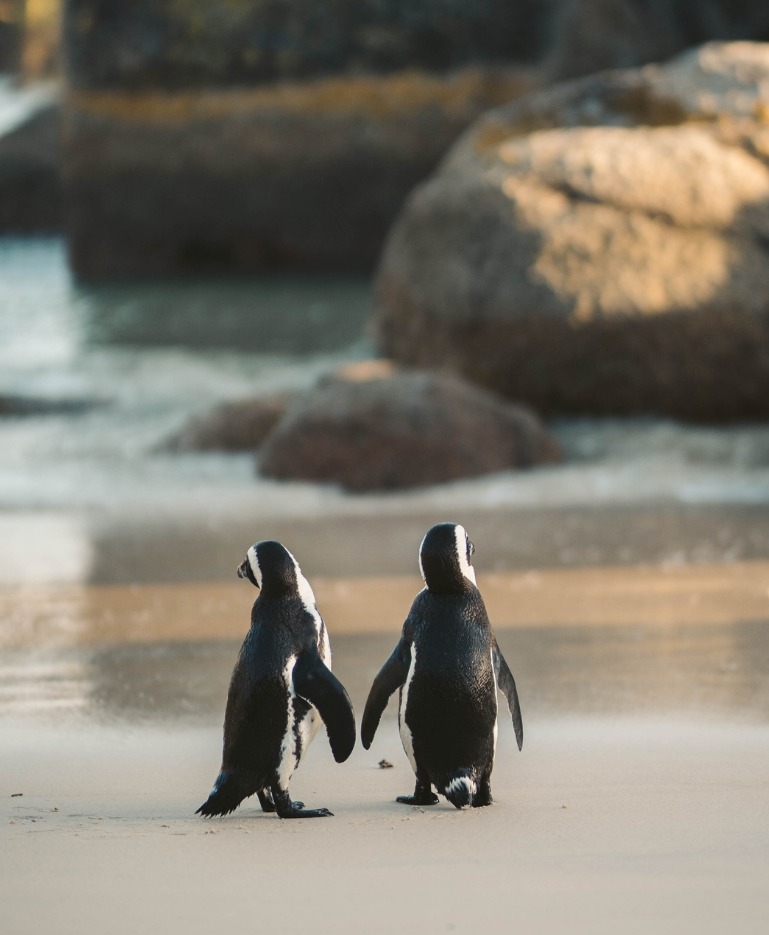
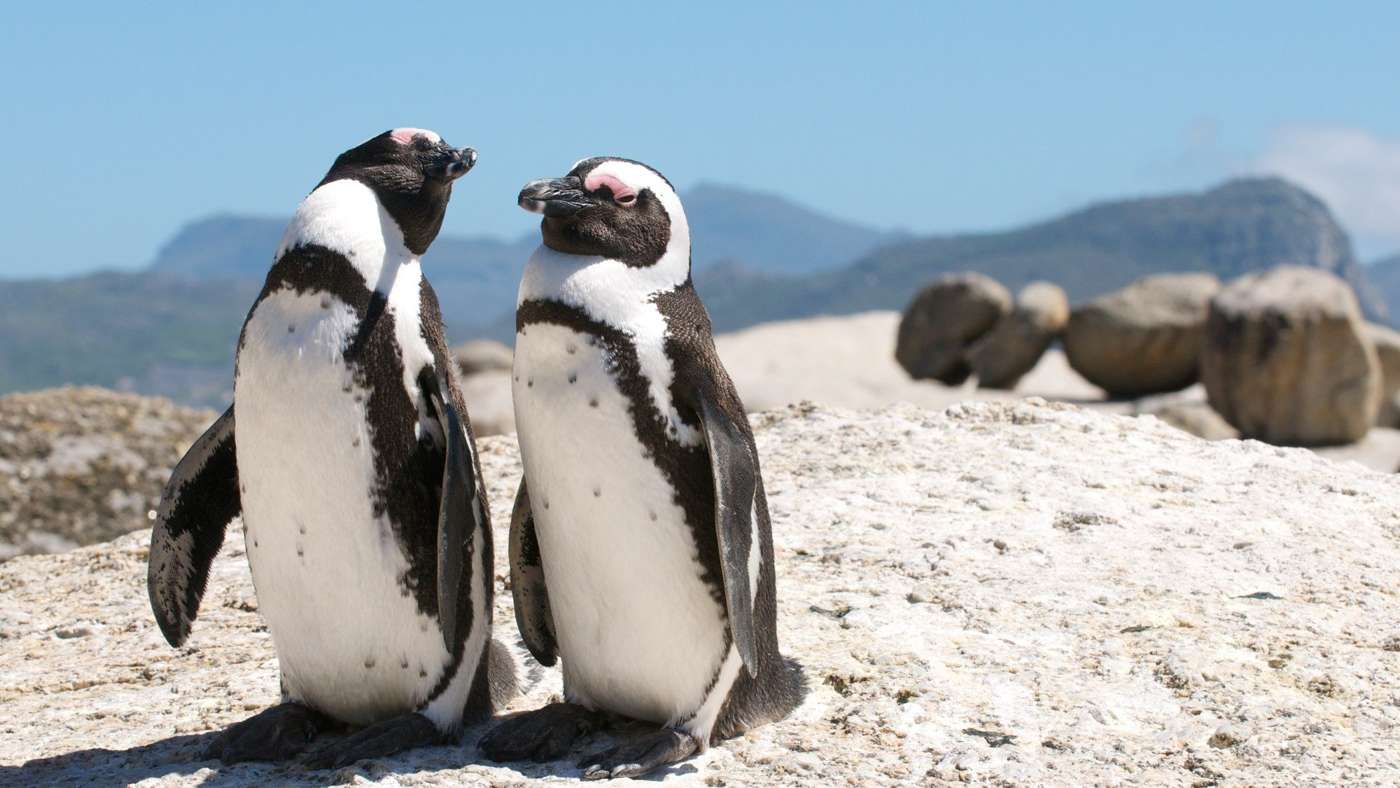
Boulders, the way I like it
Late in the day
The penguins spend the day at sea and come ashore in the afternoon, so we arrive after Cape Point rather than before it. The light is softer, too.
The boardwalks
We walk the boardwalks above Foxy Beach, where most of the colony gathers, and stop wherever the birds are closest.
A swim, if you like
At Boulders Beach itself you can swim in the sheltered coves, and the penguins often swim and stand around you. False Bay is warmer than the Atlantic side; it is still bracing.
On the way home
Boulders closes the day round the peninsula: over Chapman's Peak, down to Cape Point and the Cape of Good Hope, and back along False Bay to the penguins.
Photographs and the film, to keep
Photographs of the penguins and the boulders, and the film itself. View them large and download any you like. More will follow.
Open the gallery ↗Guests expect to see penguins in the distance, and find one looking up at them from the path.
Before you go
Where
Just south of Simon's Town on False Bay, about forty-five minutes from Cape Town.
How long
An hour is plenty to see the colony; longer if you swim or simply sit and watch.
Honestly
The penguins are wild. How many are on the beach, and how close, depends on the season, the time of day and the birds themselves.
Pairs well with
Cape Point, Chapman's Peak Drive and swimming with the seals in Hout Bay.
A Private Consultation
A 45-minute call with me, confidential and with no obligation, to talk through where this fits in your time with us. Write to john@visitorstoafrica.com or find us on WhatsApp at @visitorstoafrica.