Some stories don’t begin in the bush. They begin in stone.
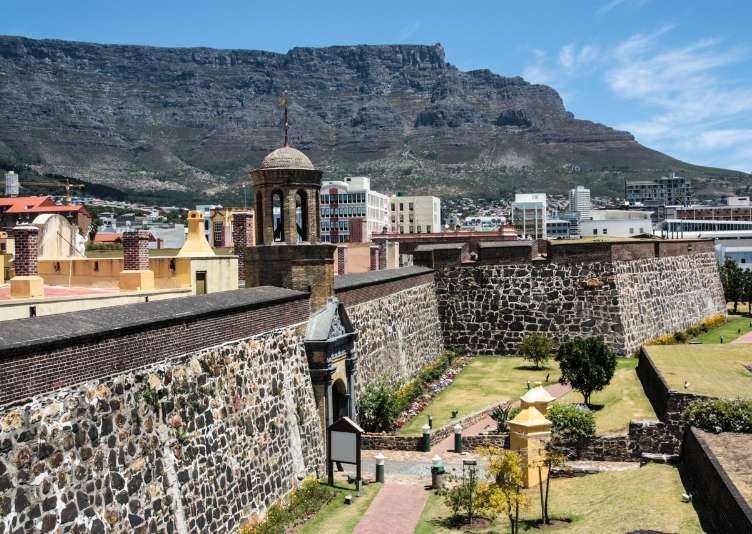
From the street, the Castle of Good Hope looks almost modest: low walls, a bell tower, a few flags, with flyovers and office blocks all around it and Table Mountain behind, stealing every photograph. Most people drive straight past. I like to start here, because so much of what our guests go on to see across Southern Africa can be traced back to decisions made inside these walls.
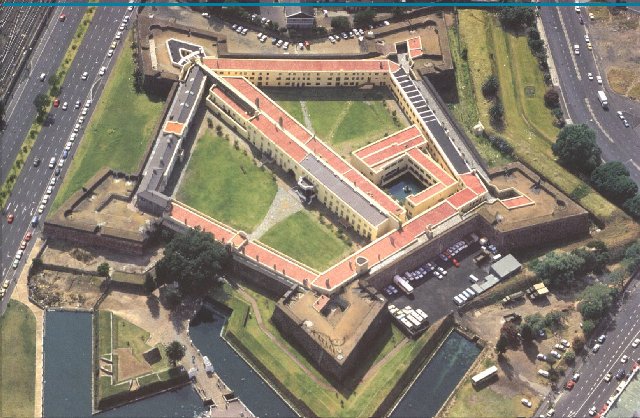
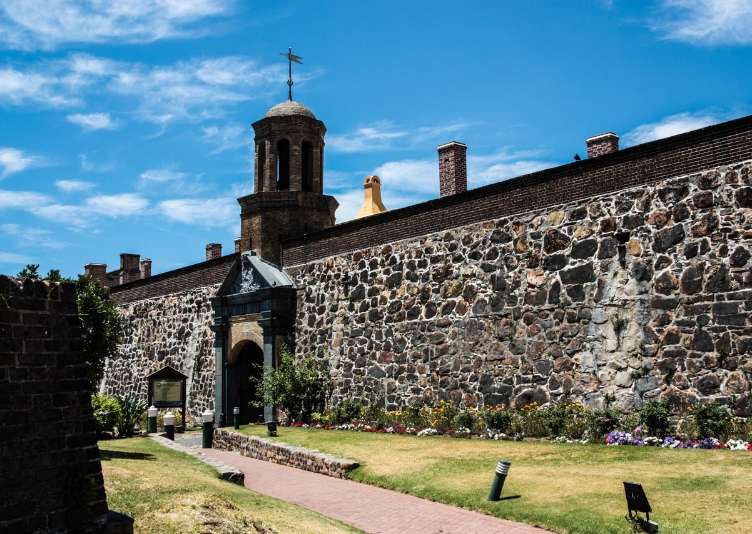
When the first stone was laid in 1666, the sea came right up to them. Everything between here and today’s harbour has since been taken from the bay. Walk across the little bridge, duck under the old Dutch East India Company coat of arms, and step into the courtyard, and the city noise falls away. It is quieter in there, as if the sun has to work harder to get in.
John Sparks
Stone, sea and the Company
This was not Jan van Riebeeck’s fort. His was clay and timber, a little way off. The stone Castle was begun four years after he left, by a Dutch East India Company that wanted something to outlast storms and the odd cannon shot, at the halfway stop on the long voyage to the spice islands.
The granite was quarried from the mountain behind it, and slate and shells were brought across from Robben Island. It was built by soldiers, volunteers, slaves and Khoi men working off punishments. Every block is someone’s day of labour.
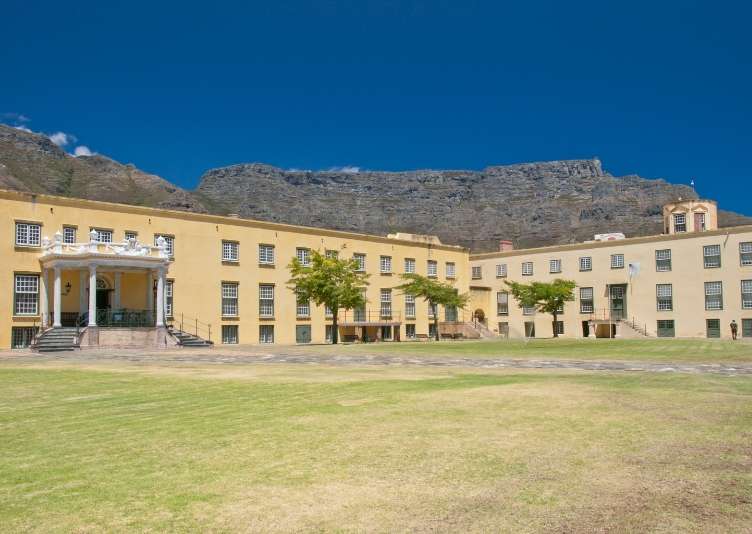
Look through the arch on the open side of the courtyard and Table Mountain fills the frame, exactly the view the Company men had when they chose this spot: fresh water running off the mountain, shelter for the ships, and a landmark that never let a sailor lose his bearings. The flags, the languages and the shape of the city have all changed since. The mountain has not.
What I show our guests
A fortress that never fought
The British took the Cape twice, at Muizenberg in 1795 and at Blaauwberg in 1806, and neither battle came near these walls. The decisions were made inside the Castle; the fighting happened elsewhere.
Yellow against the sun
The story goes that the walls were washed yellow because it throws back less glare than white in the hard Cape light. Whatever the reason, they glow in the afternoon.
The Donker Gat
Down a few steps near one bastion is the “Dark Hole”, a low, vaulted punishment cell with iron rings in the walls. It is a place to stand quietly for a moment.
The bell
Cast in Amsterdam in 1697, it once called the soldiers to parade, warned of fire and marked the hours of the day.
The ghosts
Every old castle has them. Ask me about Governor van Noodt, the curse from the gallows in 1729, and the footsteps the night watchmen still talk about.
A national monument
Declared in 1936. By then the Company was long gone and the British had come and gone. The Castle stayed; the names on its gates did not.
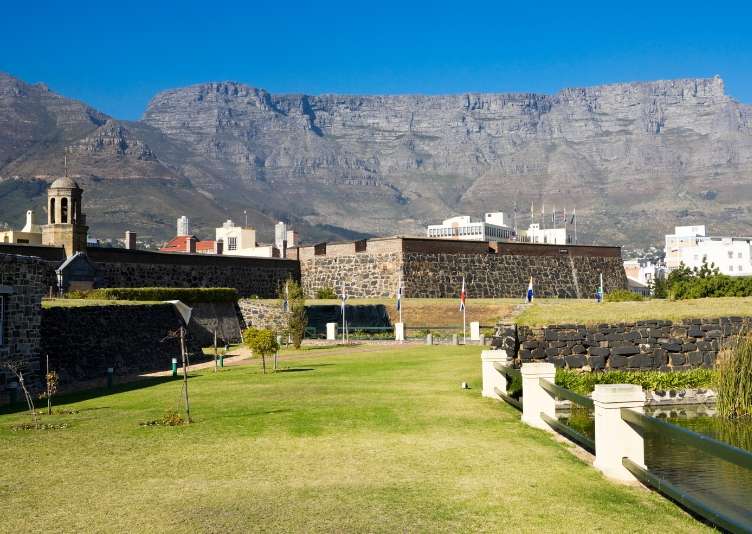
Castle of Stone and Sky
Some foundations don’t roar or bleed; they just sit in the sun, holding up centuries of decisions.
I have written about the Castle in chapter 23 of my book, September Tides, walking a couple through its gate on the morning their journey north began, towards Isandlwana, Rorke’s Drift, the Okavango and Victoria Falls.
“This is the hinge,” I told them. “Everything after it swings on this.”
We started where the walls were built. Now we go and see where they cracked.
Before you go
Where
On the edge of the city centre, near the Grand Parade and the old City Hall, a few minutes from the Waterfront.
How long
An unhurried hour or two is right. We usually go in the morning, before the heat builds in the courtyard.
Bring
A hat and comfortable shoes for the cobbles and the steps up onto the walls.
Pairs well with
A walk through the Bo-Kaap, the Noon Gun and sundowners on Signal Hill, a morning on Table Mountain, and a stay at the Victoria & Alfred at the Waterfront.