For thirty years I have been walking the Company’s Garden with guests from all over the world, presidents and kings among them. If you want to understand Cape Town, this is where to start: where South Africa as we know it really began, in a vegetable garden.
In April 1652, a few weeks after Jan van Riebeeck landed for the Dutch East India Company, his men began digging the first beds here to grow fresh food for the ships sailing between Europe and the East. The vegetables are long gone, but the garden is still here, a long green avenue of old oaks running up from the city towards the mountain.
Today it is the city’s quiet heart. Office workers eat lunch on the benches, squirrels come down from the trees, and on either side stand the buildings that tell the country’s story: Parliament, the President’s office at Tuynhuys, St George’s Cathedral, the National Gallery and the South African Museum. I still walk it slowly, because after all these years almost every step still has a story for me.
John Sparks
A walk through the story
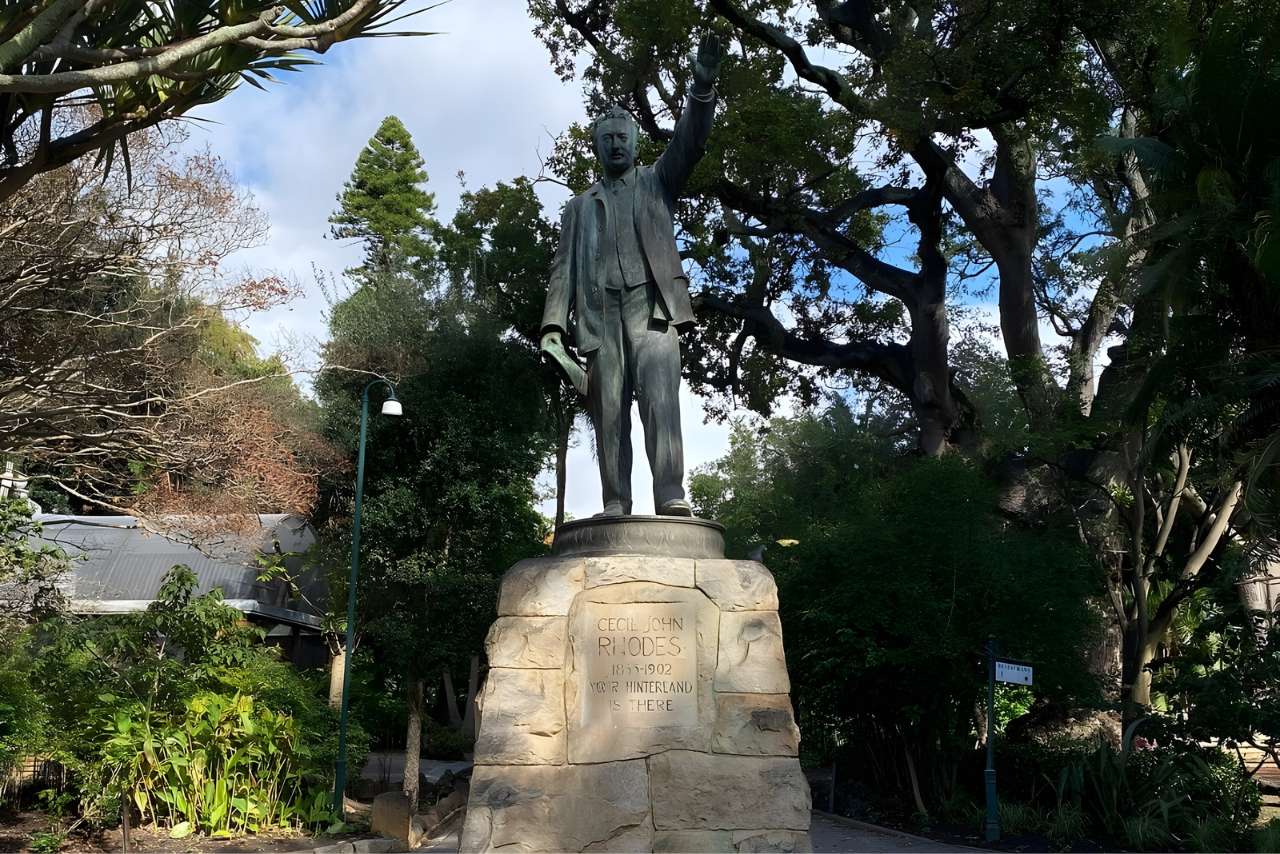
Cecil John Rhodes. Halfway up the garden stands Rhodes in bronze, in a three-piece suit, his left arm raised and pointing north. On the plinth are the words “Your hinterland is there”, his dream of British Africa from the Cape to Cairo. Rhodes was Prime Minister of the Cape Colony in the 1890s, and few men shaped southern Africa more, for good and for ill. His legacy is fiercely debated in South Africa today, and the statue is one of the best places I know to talk about it honestly.
The Houses of Parliament. On the eastern side of the garden stands Parliament, a grand red-brick and white building finished in 1884 for the Cape Colony, where South Africa’s laws are still made. Next to it is Tuynhuys, the old garden house of the Dutch governors, now the President’s office in Cape Town.
The oldest pear tree. Behind a little fence grows a pear tree thought to have been planted in the garden’s first years, around 1652, the oldest cultivated pear tree in the country.
The squirrels. The grey squirrels that dart across the paths are American. Rhodes himself is said to have brought them here, and they have never left.
What you pass on the way
St George’s Cathedral
At the bottom of the garden, the cathedral where Archbishop Desmond Tutu preached.
The Slave Lodge
One of the oldest buildings in Cape Town, where enslaved people of the Company were held. Today it is a museum of their story.
The rose garden
Laid out in 1929, and lovely in summer.
Delville Wood
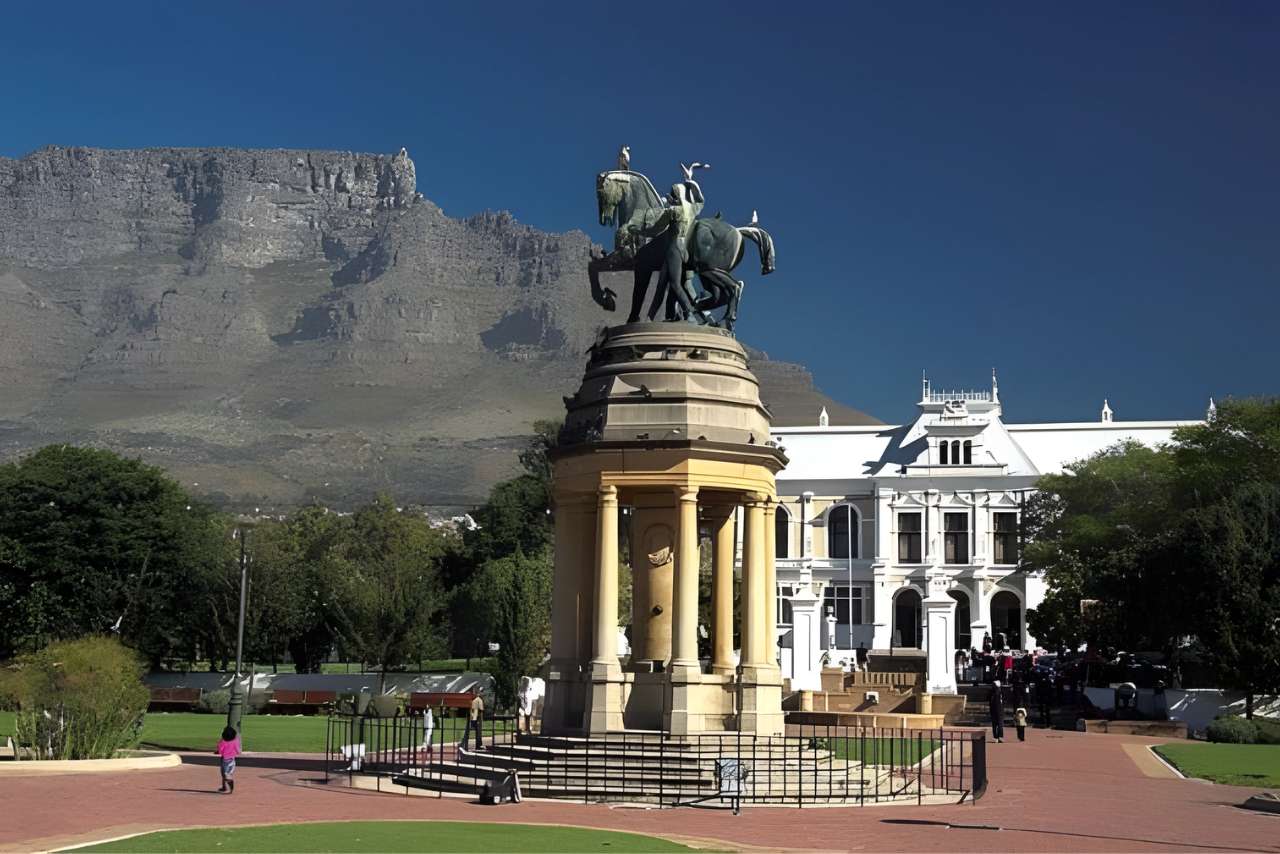
The memorial to the South Africans who fell at Delville Wood in France in 1916, designed by Herbert Baker. It stands in front of the South African Museum, with Table Mountain rising behind.
The National Gallery
South African art, old and new, a few steps off the avenue.
The South African Museum
At the top of the garden, home of Eve’s footprints and the great whale skeletons.
The Company’s Garden, the way I like it
In at the bottom
We start near St George’s Cathedral and walk up the avenue under the oaks.
Parliament
Past the Houses of Parliament and Tuynhuys, with the story of how the country is governed.
Rhodes
A stop at the statue, pointing north, and an honest conversation about the man.
The old pear tree
The oldest cultivated pear tree in South Africa, from the garden’s first years.
To the museum
Up to the South African Museum at the top of the garden, for Eve’s footprints.
Cape Town began here, in a vegetable garden for passing ships.
Before you go
Where
Between Adderley Street and the foot of Table Mountain, in the centre of Cape Town. The vehicle drops us at the bottom and meets us at the top.
When
Open every day. Best in the morning or late afternoon, when the light comes through the oaks.
Time
About half an hour on foot, longer with stops. The paths are flat and easy.
Entry
The garden is free. The museums around it charge their own entry.